
Table of Contents
Introduction: Understanding HACCP License Requirements in Nepal
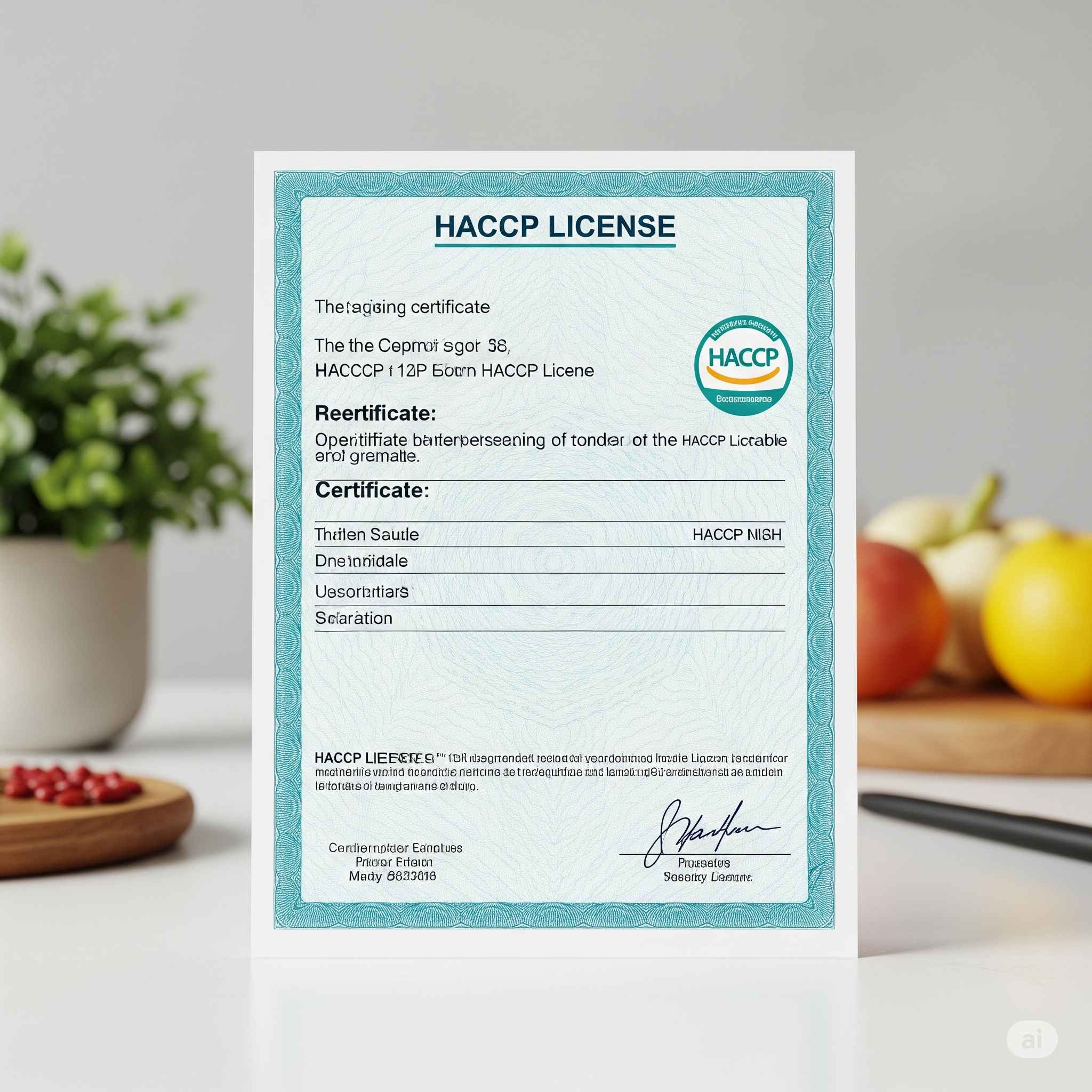
HACCP License Nepal is essential for food businesses operating in the country. This comprehensive certification ensures food safety standards are maintained throughout the production process.
The Hazard Analysis and Critical Control Points (HACCP) system is required by the Department of Food Technology and Quality Control (DFTQC). Moreover, this certification is mandatory for food manufacturers, processors, and exporters.
What is HACCP License? Best Food Safety Practices Explained
HACCP license represents internationally recognized food safety management standards. These guidelines are implemented by food businesses globally to prevent foodborne illnesses.
Key Components of HACCP System:
| HACCP Principle | Description | Legal Requirement |
|---|---|---|
| Hazard Analysis | Identify potential food safety hazards | Mandatory |
| Critical Control Points | Determine control points in process | DFTQC Certified |
| Critical Limits | Establish safety parameters | Scientifically Valid |
| Monitoring Procedures | Track control point performance | Documented |
| Corrective Actions | Address deviations from limits | Immediate Response |
| Verification | Confirm system effectiveness | Regular Audits |
| Record Keeping | Maintain documentation | Legal Compliance |
How to Obtain HACCP License: Step-by-Step Process
Phase 1: Pre-Application Requirements
The application process begins with comprehensive preparation. Furthermore, documentation must be assembled systematically.
Required Documents:
- Business registration certificate
- Food handler training certificates
- Facility layout plans
- Equipment specifications
- HACCP plan draft
Phase 2: Application Submission Process
Applications are submitted to the Department of Food Technology and Quality Control. Additionally, all supporting documents must be included.
Processing Timeline:
| Stage | Duration | Action Required |
|---|---|---|
| Document Review | 21 days | DFTQC Assessment |
| Site Inspection | 14 days | Facility Audit |
| HACCP Plan Review | 30 days | Technical Evaluation |
| License Issuance | 7 days | Final Approval |
Phase 3: Inspection and Certification
Site inspections are conducted by qualified DFTQC officials. Subsequently, compliance reports are generated based on findings.
Legal Framework: Food Safety Regulations in Nepal
Food Safety Laws and Standards
Food safety in Nepal is governed by the Food Act 2023 and related regulations. These laws are enforced by multiple government agencies.
Regulatory Bodies:
- Department of Food Technology and Quality Control (DFTQC)
- Nepal Bureau of Standards and Metrology (NBSM)
- Ministry of Health and Population
- Local government authorities
Compliance Requirements for Food Businesses
Food establishments must meet specific regulatory requirements. These standards ensure consumer safety and product quality.
Key Compliance Areas:
| Area | Standard | Monitoring Body |
|---|---|---|
| Food Safety | HACCP Principles | DFTQC |
| Quality Standards | Nepal Standards | NBSM |
| Hygiene Practices | Food Act 2023 | Local Government |
| Labeling Requirements | Food Regulations | DFTQC |
Best Practices for HACCP Implementation
Hazard Analysis Development
Hazard analysis forms the foundation of HACCP systems. These assessments must be conducted thoroughly for each product.
Types of Hazards:
- Biological hazards (bacteria, viruses, parasites)
- Chemical hazards (pesticides, cleaning agents)
- Physical hazards (metal, glass, plastic)
- Allergen considerations
Critical Control Points Identification
Critical control points are determined through systematic analysis. Moreover, these points must be monitored continuously.
CCP Identification Criteria:
- Points where hazards can be prevented
- Locations where hazards can be eliminated
- Areas where hazards can be reduced
- Final control opportunities
Cost Analysis: HACCP License Fees and Implementation
Government Fees Structure
| Fee Type | Amount (NPR) | Validity Period |
|---|---|---|
| Application Fee | 15,000 | One-time |
| Inspection Fee | 10,000 | Per inspection |
| License Fee | 25,000 | 3 years |
| Renewal Fee | 20,000 | Every 3 years |
Implementation Costs Breakdown
Beyond government fees, additional expenses are incurred. These costs vary based on business size and complexity.
Estimated Implementation Costs:
- Consultant fees: NPR 200,000 – 500,000
- Staff training: NPR 100,000 – 300,000
- Equipment upgrades: NPR 500,000 – 2,000,000
- Documentation: NPR 50,000 – 150,000
Industries Requiring HACCP License
Food Manufacturing Sector
Food manufacturers must obtain HACCP certification before operations. This requirement applies to all processed food products.
Manufacturing Categories:
- Dairy products processing
- Meat and poultry processing
- Bakery and confectionery
- Beverage production
- Spice and seasoning manufacturing
Food Service Industry
Restaurants and catering businesses require HACCP compliance. These establishments serve food directly to consumers.
Service Categories:
- Restaurants and cafes
- Hotel food services
- Catering companies
- Institutional food services
- Street food vendors (in some municipalities)
Common Challenges and Easy Solutions
Implementation Difficulties
Many businesses face challenges during HACCP implementation. However, proper planning prevents most issues.
Common Problems:
- Inadequate staff training
- Insufficient documentation
- Poor record-keeping systems
- Lack of management commitment
Practical Solutions Framework
Solutions are implemented through systematic approaches. These methods ensure successful HACCP compliance.
Solution Strategy:
- Leadership commitment and support
- Comprehensive staff training programs
- Systematic documentation development
- Regular monitoring and verification
Benefits of HACCP License for Businesses
Market Access Advantages
HACCP certification opens domestic and international markets. These opportunities enhance business growth potential.
Market Benefits:
- Export authorization to international markets
- Enhanced consumer confidence
- Competitive advantage in procurement
- Access to premium market segments
Operational Excellence
HACCP implementation improves operational efficiency. These improvements reduce costs and enhance quality.
Operational Benefits:
- Reduced product recalls
- Improved food safety culture
- Enhanced brand reputation
- Lower liability risks
HACCP vs Other Food Safety Certifications
Comparison with ISO 22000
| Aspect | HACCP | ISO 22000 |
|---|---|---|
| Scope | Food safety only | Comprehensive management |
| Certification | Government issued | Third-party certified |
| Cost | Lower | Higher |
| International Recognition | High | Very High |
Integration with Other Standards
HACCP can be integrated with other management systems. This integration provides comprehensive business benefits.
Compatible Standards:
- ISO 9001 (Quality Management)
- ISO 14001 (Environmental Management)
- ISO 45001 (Occupational Health and Safety)
- BRC (British Retail Consortium)
Expert Legal Advice: Choosing the Right Food Safety Consultant
Criteria for Consultant Selection
The right professional partner ensures successful HACCP implementation. These factors guide selection decisions.
Selection Criteria:
- Food safety expertise
- HACCP implementation experience
- Industry knowledge
- Success track record
Value-Added Services
Leading consultants provide comprehensive services. These services extend beyond basic compliance requirements.
Service Portfolio:
- HACCP plan development
- Staff training programs
- Documentation preparation
- Ongoing compliance support
Digital Tools for HACCP Management
Software Solutions
Modern HACCP management utilizes digital tools. These solutions streamline compliance and monitoring processes.
Digital Benefits:
- Automated record-keeping
- Real-time monitoring alerts
- Compliance tracking
- Report generation
Mobile Applications
Mobile apps facilitate HACCP monitoring. These tools enable on-the-go compliance management.
Mobile Features:
- Temperature logging
- Corrective action tracking
- Photo documentation
- Instant reporting
Future Trends in Food Safety Compliance
Emerging Technologies
New technologies are revolutionizing food safety management. These innovations enhance HACCP effectiveness.
Technology Trends:
- Internet of Things (IoT) sensors
- Blockchain traceability
- Artificial Intelligence monitoring
- Predictive analytics
Regulatory Evolution
Food safety regulations continue evolving. These changes require ongoing adaptation and compliance.
Regulatory Trends:
- Enhanced traceability requirements
- Stricter contamination controls
- Increased inspection frequency
- Digital documentation mandates
Conclusion: Your Path to HACCP Success
HACCP license acquisition requires careful planning and systematic implementation. Success depends on understanding regulatory requirements and establishing robust food safety systems.
The food industry in Nepal offers significant opportunities for growth. However, compliance with HACCP standards is essential for sustainable business success.
Professional guidance ensures smooth license acquisition and ongoing compliance. Moreover, expert support minimizes risks and accelerates the certification process.
Take the first step toward HACCP compliance today. Contact qualified food safety consultants to begin your journey toward operational excellence and consumer protection.
Contact Information: For expert consultation on HACCP license and food safety compliance, reach out to experienced food safety professionals in Nepal. Contact Neplawyer
Company Darta Nepal & Corporate Biz Legal is a trusted law firm in Nepal, providing expert company registration services in Nepal with full legal compliance and professional support.
HACCP License Nepal, Food Safety Certification, DFTQC Approval, Hazard Analysis Critical Control Points, Food Safety Management, Nepal Food Regulations, Food Business License, HACCP Implementation, Food Safety Training, Critical Control Points
Frequently Asked Questions
How long does HACCP license processing take?
The complete process typically takes 60-90 days from application submission. However, preparation time varies based on business readiness.
Q2: I
Q3:.
Q4:
Q5:
Q6:
Q7:
Q8:
Q9:
Q10:
Is HACCP license mandatory for all food businesses?
Yes, HACCP certification is mandatory for food manufacturers, processors, and exporters. Additionally, many food service businesses require compliance.
Can small businesses afford HACCP implementation?
Yes, HACCP can be scaled for small businesses. Moreover, simplified approaches are available for low-risk operations
What happens during HACCP inspection?
Inspectors review HACCP plans, observe operations, and verify record-keeping. Subsequently, compliance reports are generated.
How often must HACCP plans be updated?
HACCP plans must be reviewed annually or when significant changes occur. Additionally, updates are required for new products or processes.
Can HACCP license be suspended or revoked?
Yes, licenses can be suspended for non-compliance. Moreover, serious violations may result in permanent revocation.
Are there penalties for operating without HACCP license?
Yes, penalties include fines up to NPR 500,000 and business closure. Criminal charges may also apply for serious violations.
Can consultants help with HACCP implementation?
Yes, qualified consultants can assist throughout the process. Furthermore, their expertise often accelerates approval and ensures compliance.
What training is required for HACCP implementation?
Staff must receive HACCP training appropriate to their roles. Moreover, management must demonstrate competency in HACCP principles.
How does HACCP relate to other food safety requirements?
HACCP integrates with other food safety regulations. Additionally, it may be required for compliance with export standards.
Was this article helpful?
Let us know what you think!