
Table of Contents
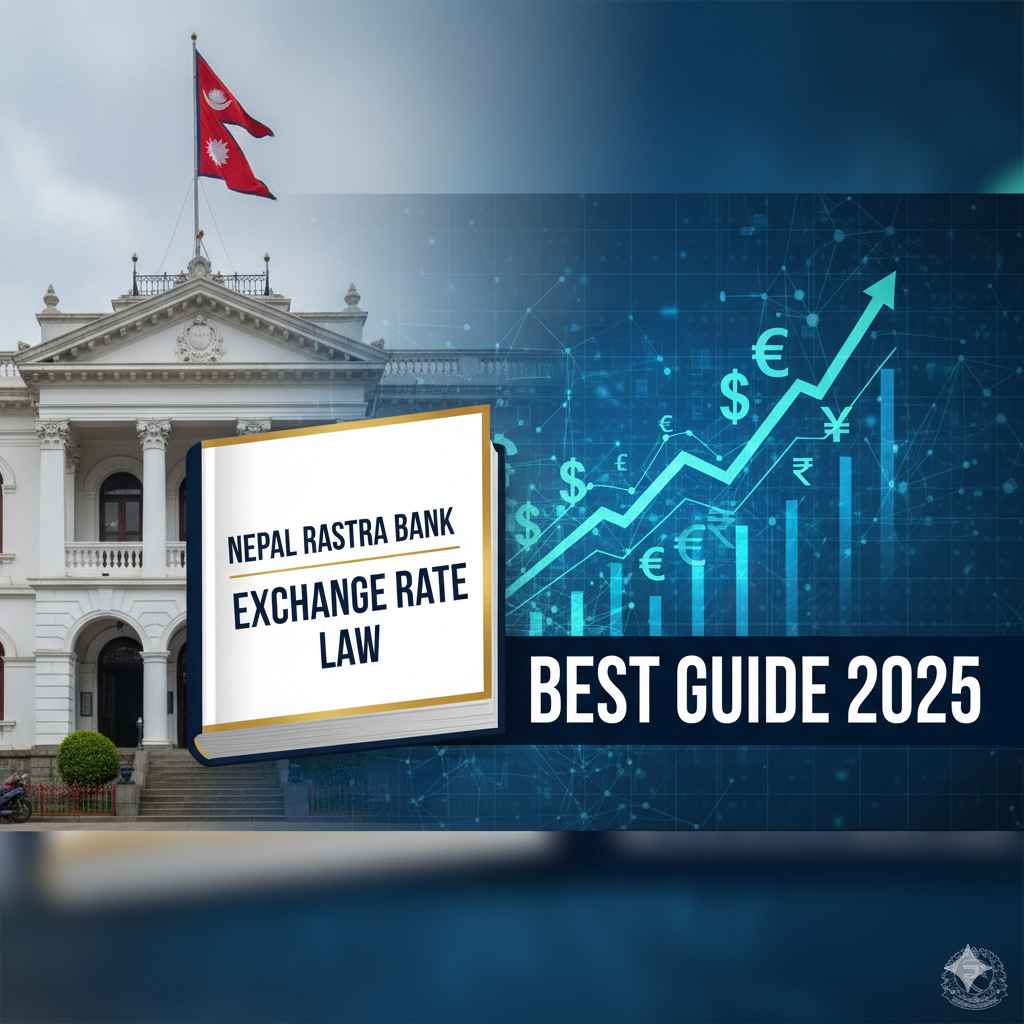
Nepal Rastra Bank exchange rate law governs all foreign exchange transactions in Nepal, establishing a comprehensive legal framework that regulates currency conversion, international trade, and cross-border financial activities. As Nepal’s central bank, the Nepal Rastra Bank (NRB) maintains exclusive authority over foreign exchange policies, ensuring economic stability while facilitating legitimate international transactions.
Education Consultancy Registration in Nepal
Understanding Nepal Rastra Bank Exchange Rate Law
Nepal Rastra Bank exchange rate law refers to the body of legal regulations and policies established by Nepal’s central bank to control and manage foreign currency transactions within the country. This legal framework is designed to maintain economic stability, prevent financial crimes, and ensure orderly foreign exchange markets while supporting Nepal’s international trade and investment objectives.
The foreign exchange regulation Nepal system operates under the principle that all foreign exchange transactions must be conducted through authorized channels and at rates determined by the NRB. This centralized approach allows the central bank to effectively manage Nepal’s foreign exchange reserves and respond to changing economic conditions.
Legal Framework Governing Exchange Rates
The Nepal Rastra Bank exchange rate law is primarily established through several key legislative instruments:
| Legal Instrument | Year Enacted | Key Provisions |
|---|---|---|
| Foreign Exchange (Regulation) Act | 2019 | Primary legislation governing all forex transactions |
| Nepal Rastra Bank Act | 2058 (2002) | Establishes NRB’s authority over exchange rates |
| NRB Foreign Exchange Bylaws | Ongoing updates | Specific operational regulations and procedures |
| Unified Circulars | Regular updates | Current policies and procedural requirements |
Who Regulates Foreign Exchange in Nepal?
The Nepal Rastra Bank serves as the sole regulatory authority for foreign exchange transactions in Nepal. Through its Foreign Exchange Management Department, the NRB:
- Formulates and implements foreign exchange policies
- Manages foreign exchange reserves and determines exchange rate systems
- Issues licenses to authorized dealers and money changers
- Regulates, inspects, and supervises foreign exchange institutions
- Approves and manages foreign direct investment and debt
Key Components of Nepal Rastra Bank Exchange Rate Law
Exchange Rate Determination System
Nepal Rastra Bank exchange rate law establishes a dual exchange rate system:
- Fixed Rates: Set by NRB for specific currencies, primarily the Indian Rupee (INR)
- Open Market Rates: Determined by market forces for other major currencies, but within NRB guidelines
The current exchange rates as of October 2025 demonstrate this system:
| Currency | Unit | NRB Buy Rate | NRB Sell Rate |
|---|---|---|---|
| USD (U.S. Dollar) | 1 | 141.77 | 142.37 |
| EUR (European Euro) | 1 | 166.42 | 167.13 |
| GBP (UK Pound Sterling) | 1 | 190.42 | 191.22 |
| INR (Indian Rupee) | 100 | 160.00 | 160.15 |
Licensing Requirements for Foreign Exchange Transactions
Under Nepal Rastra Bank exchange rate law, any entity wishing to conduct foreign exchange transactions must obtain appropriate licensing from the NRB. The licensing process involves:
Step 1: Application Submission
- Detailed business plan and financial projections
- Proof of minimum capital requirements
- Background checks of promoters and key management
- Compliance with anti-money laundering regulations
Step 2: NRB Evaluation
- Financial viability assessment
- Compliance with NRB monetary policy objectives
- Fit and proper evaluation of management
- Technical capability assessment
Step 3: License Issuance
- License type determination (money changer, bank, etc.)
- Transaction limits and conditions
- Reporting requirements
- Compliance obligations
Commercial Bank License in Nepal
What Transactions Are Regulated Under NRB Exchange Rate Law?
Personal Foreign Exchange Transactions
Nepal Rastra Bank exchange rate law regulates various personal transactions:
- Currency limits: Individuals can carry up to USD 5,000 or equivalent without declaration
- Travel allowances: Specific limits for tourism, medical treatment, and education
- Remittances: Regulations for sending money abroad for family maintenance
- Gift transactions: Limits on sending gifts to foreign recipients
Business and Commercial Transactions
Commercial foreign exchange activities are extensively regulated:
| Transaction Type | Regulatory Requirements | Documentation Needed |
|---|---|---|
| Import Payments | Letter of credit or advance payment approval | Import license, invoice, customs declaration |
| Export Proceeds | Repatriation within specified timeframe | Export declaration, shipping documents |
| Foreign Investment | FDI approval and reporting | Investment proposal, business registration |
| External Borrowing | NRB approval and registration | Loan agreement, business plan |
Foreign Investment Regulations
Nepal Rastra Bank exchange rate law includes specific provisions for foreign investment:
- Repatriation guarantees: Foreign investors can repatriate profits and capital
- Investment thresholds: Minimum investment amounts for different sectors
- Reporting requirements: Regular submission of investment status reports
- Compliance monitoring: Ongoing supervision of foreign investments
When Do Exchange Rate Laws Apply?
Temporal Application of Regulations
Nepal Rastra Bank exchange rate law applies continuously, but specific provisions may be triggered by:
- Economic crises: Enhanced controls during financial instability
- Balance of payments issues: Temporary restrictions on certain transactions
- Market volatility: Adjustments to exchange rate mechanisms
- Policy changes: Updates to reflect new economic priorities
Transaction Timing Requirements
The law establishes specific timeframes for various activities:
- Export proceeds repatriation: Within 180 days of export
- Import settlement: As per letter of credit terms
- License renewals: Annual renewal requirements
- Reporting submissions: Monthly, quarterly, and annual reporting deadlines
Where Do Exchange Rate Regulations Apply?
Geographic Jurisdiction
Nepal Rastra Bank exchange rate law applies throughout Nepal’s territory, including:
- All 77 districts: Uniform application nationwide
- Border crossings: Specific regulations for land borders with India and China
- International airports: Customs enforcement at Tribhuvan and regional airports
- Free trade zones: Special provisions for designated areas
Institutional Coverage
The regulations apply to all institutions dealing in foreign exchange:
- Commercial banks: Primary authorized dealers
- Development banks: Limited foreign exchange authority
- Money changers: Retail currency exchange services
- Hotels and tourism: Limited acceptance facilities
- Other authorized entities: Specialized service providers
Why Does Nepal Regulate Exchange Rates?
Economic Stability Objectives
Nepal Rastra Bank exchange rate law serves several critical economic objectives:
- Balance of payments management: Ensuring adequate foreign exchange reserves
- Exchange rate stability: Preventing excessive volatility
- Monetary policy implementation: Supporting broader economic goals
- Financial system integrity: Preventing systemic risks
Financial Crime Prevention
The regulations help prevent various financial crimes:
- Money laundering: Tracking suspicious foreign exchange transactions
- Terrorist financing: Monitoring cross-border fund movements
- Tax evasion: Ensuring proper reporting of international transactions
- Capital flight: Preventing unauthorized outflows of foreign currency
How to Comply with Nepal Rastra Bank Exchange Rate Law
Individual Compliance Requirements
For individuals, compliance with Nepal Rastra Bank exchange rate law involves:
- Declaration requirements: Declaring foreign currency above prescribed limits
- Documentation maintenance: Keeping receipts and transaction records
- Authorized channels: Using only licensed money changers and banks
- Purpose adherence: Using foreign exchange only for declared purposes
Business Compliance Framework
Businesses must implement comprehensive compliance systems:
Internal Controls
- Designated compliance officers
- Transaction monitoring systems
- Staff training programs
- Regular internal audits
External Reporting
- Transaction reporting to NRB
- Annual compliance certifications
- Suspicious activity reports
- Regulatory inquiries response
Penalties for Non-Compliance
Violations of Nepal Rastra Bank exchange rate law result in significant penalties:
| Violation Type | Penalty | Additional Consequences |
|---|---|---|
| Unauthorized forex dealing | Fine up to 3x transaction value | Criminal prosecution |
| Failure to repatriate export proceeds | 25% penalty on outstanding amount | License suspension |
| False declarations | Confiscation of currency | Travel restrictions |
| Money laundering | Imprisonment up to 4 years | Asset forfeiture |
Recent Developments in Nepal Rastra Bank Exchange Rate Law
2025 Regulatory Updates
Nepal Rastra Bank exchange rate law has undergone several recent updates:
- Digital currency regulations: New framework for cryptocurrency transactions
- Cross-border payments: Simplified procedures for small-value transfers
- Tourism sector: Enhanced facilities for foreign currency acceptance
- Remittance services: Improved regulations for money transfer operators
Emerging Trends
Several trends are shaping the future of exchange rate regulation:
- Digital transformation: Moving towards electronic reporting systems
- International cooperation: Enhanced information sharing with other central banks
- Risk-based supervision: More targeted regulatory approaches
- Financial inclusion: Expanding access to foreign exchange services
Conclusion: Your Next Steps for Exchange Rate Compliance
Nepal Rastra Bank exchange rate law represents a comprehensive and evolving legal framework that balances regulatory control with the need to facilitate legitimate international transactions. As Nepal’s economy continues to integrate with global markets, understanding and complying with these regulations becomes increasingly important for individuals and businesses alike.
For legal professionals, businesses, and individuals navigating Nepal’s foreign exchange landscape, staying informed about regulatory developments and maintaining robust compliance systems is essential. The Nepal Rastra Bank continues to modernize its regulatory approach, embracing digital transformation while maintaining strict oversight to ensure economic stability.
Call to Action: For personalized guidance on Nepal Rastra Bank exchange rate law compliance, consultation with qualified legal professionals specializing in Nepalese financial regulations is recommended. Stay updated with the latest NRB circulars and regulatory changes to ensure continuous compliance in this dynamic legal environment.
Corporate Biz legal and Company Darta Nepal is the best and most credible company registration in Nepal and expert Law firm in Nepal
Frequently Asked Questions
What is the current foreign currency limit for individuals in Nepal?
Individuals can carry up to USD 5,000 or equivalent in other foreign currencies without declaration when entering or leaving Nepal. Amounts exceeding this limit must be declared to customs authorities.
How often does Nepal Rastra Bank update exchange rates?
Nepal Rastra Bank updates exchange rates daily, based on market conditions and international currency movements. The rates are published on the official NRB website and made available to all authorized dealers.
What licenses are required to operate a money changing business in Nepal?
Money changing businesses require a license from Nepal Rastra Bank under the Foreign Exchange (Regulation) Act 2019. The licensing process includes application submission, NRB evaluation, capital requirements, and compliance system implementation.
Can Nepali citizens invest in foreign stocks and bonds?
Nepali citizens can invest in foreign securities with prior approval from Nepal Rastra Bank. The investment must comply with foreign exchange regulations and reporting requirements, and there are annual limits on individual investments.
What are the penalties for violating foreign exchange regulations in Nepal?
Penalties include fines up to three times the transaction value, confiscation of foreign currency, imprisonment up to 4 years, and suspension or cancellation of business licenses. Repeat offenders face enhanced penalties.
How does Nepal Rastra Bank determine exchange rates?
Nepal Rastra Bank determines exchange rates based on market conditions, international currency movements, Nepal's balance of payments position, and monetary policy objectives. The INR rate is fixed, while other currencies follow market-based rates within NRB guidelines.
What documents are required for foreign exchange transactions?
Required documents include valid identification, transaction purpose declaration, supporting documentation (like invoices for trade transactions), and compliance with anti-money laundering requirements. Business transactions require additional commercial documentation.
Can foreign companies repatriate profits from Nepal?
Yes, foreign companies can repatriate profits and capital from Nepal with prior NRB approval. The repatriation must comply with foreign exchange regulations, tax clearance requirements, and proper documentation of the original investment.
Was this article helpful?
Let us know what you think!