

Updated on: Jan, 17 2026
Introduction: The Global Shift in Garment Manufacturing
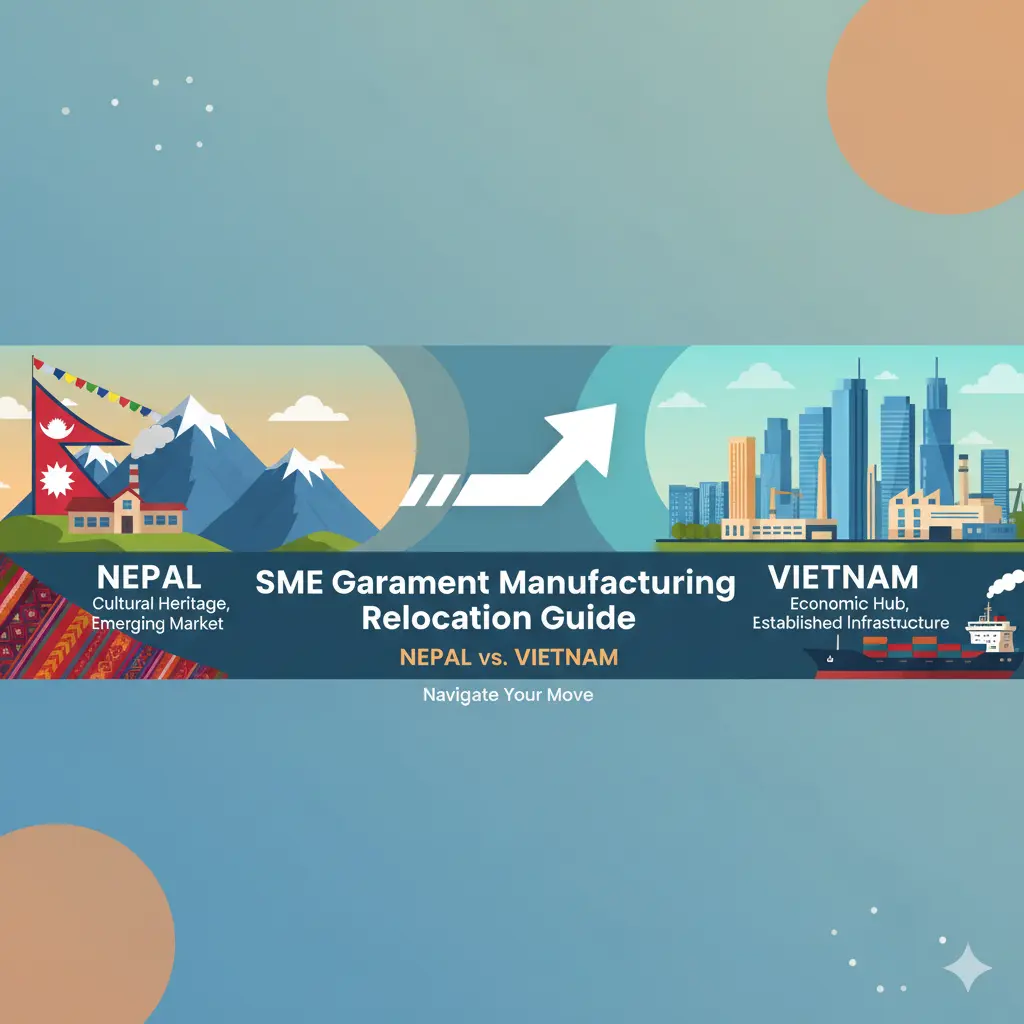
The landscape of SME garment manufacturing relocation has evolved significantly in recent years, with businesses increasingly evaluating optimal production locations. Nepal and Vietnam have emerged as compelling alternatives to traditional manufacturing hubs. This comprehensive analysis examines the legal frameworks, economic advantages, and strategic considerations for small and medium enterprises contemplating relocation between these two Asian nations. As global supply chains continue to transform, understanding the comparative advantages of each location has become essential for business leaders seeking competitive advantages in the textile sector.
Current State of Garment Manufacturing in Nepal
Nepal’s garment industry has experienced substantial growth despite geographical challenges. The sector has been bolstered by preferential trade agreements with major markets including the European Union and India. SME garment manufacturing relocation to Nepal has been particularly attractive due to the country’s duty-free access to these markets under various trade arrangements.
The industry is characterized by:
- Labor costs approximately 30% lower than China
- Growing specialization in organic and sustainable textiles
- Increasing foreign direct investment in manufacturing zones
- Government incentives for export-oriented businesses
However, challenges remain including infrastructure limitations, bureaucratic hurdles, and a smaller domestic market compared to regional competitors.
If you want to Open Travel Agency Also Read
Travel Agency Registration in Nepal
Travel Company Registration in Nepal
How to open Travel Agency in Nepal
Vietnam’s Garment Manufacturing Landscape
Vietnam has established itself as a global manufacturing powerhouse, particularly in the garment sector. The country’s textile industry relocation appeal stems from its sophisticated production capabilities, extensive trade agreements, and skilled workforce. As the world’s third-largest garment exporter, Vietnam offers significant advantages for SMEs seeking scale and market access.
Key strengths include:
- Comprehensive free trade agreements with major markets
- Advanced manufacturing infrastructure
- Highly skilled and productive workforce
- Strong government support for foreign investment
- Established supply chain networks
The country’s garment sector benefits from significant investment in technology and processes, making it particularly attractive for higher-value manufacturing operations.
Legal Frameworks for SME Garment Manufacturing
Nepal’s Regulatory Environment
SME garment manufacturing relocation to Nepal requires navigation of several key legal frameworks. The Foreign Investment and Technology Transfer Act (FITTA) 2019 governs foreign investment, while the Industrial Enterprises Act 2016 provides incentives for manufacturing businesses. The Labor Act 2017 establishes employment regulations, and tax considerations are outlined in the Income Tax Act.
Foreign investors should note:
- Minimum foreign investment requirements of NPR 50 million for certain sectors
- Restrictions on land ownership for foreign entities
- Mandatory registration with the Department of Industry
- Required environmental impact assessments for larger operations
The legal landscape has been progressively liberalized, but businesses should seek local legal counsel to ensure compliance with all applicable regulations.
Vietnam’s Regulatory Environment
Vietnam offers a more established legal framework for foreign manufacturing operations. The Law on Investment 2020 and Law on Enterprises 2020 provide the foundation for foreign business operations. The country’s garment sector is further regulated by specific textile industry guidelines and labor laws.
Key regulatory features include:
- 100% foreign ownership permitted in most manufacturing sectors
- Streamlined investment registration processes
- Comprehensive tax incentives for specific regions and sectors
- Strong intellectual property protection frameworks
- Well-established dispute resolution mechanisms
Vietnam’s legal environment is generally considered more transparent and predictable than Nepal’s, though bureaucratic processes can still present challenges for foreign businesses.
Comparative Analysis: Nepal vs Vietnam
| Factor | Nepal | Vietnam |
|---|---|---|
| Labor Costs (monthly) | $100-150 | $200-250 |
| Minimum Investment | NPR 50 million | No minimum requirement |
| Tax Incentives | Up to 10 years tax holiday | Region-specific incentives |
| Trade Agreements | Limited (mainly with India, EU) | Comprehensive (EU, CPTPP, RCEP) |
| Infrastructure Quality | Developing | Advanced |
| Political Stability | Moderate | High |
| Land Ownership | Restricted for foreigners | Leasehold arrangements available |
| Skilled Workforce Availability | Limited | Abundant |
This comparative analysis highlights the distinct advantages each location offers for garment export regulations compliance and market access. Vietnam’s superior infrastructure and trade agreements make it more suitable for businesses targeting global markets, while Nepal’s lower costs may benefit budget-conscious SMEs focusing on specific regional markets.
Relocation Considerations for SMEs
Cost Implications
The financial implications of SME garment manufacturing relocation extend beyond direct labor costs. While Nepal offers approximately 30-40% lower labor costs than Vietnam, businesses must factor in additional expenses including logistics, compliance, and productivity considerations.
Vietnam’s higher labor costs are offset by:
- Superior worker productivity (estimated 25-35% higher)
- Better infrastructure reducing operational costs
- Lower compliance and administrative expenses
- More efficient customs and logistics processes
Total cost of ownership analysis typically reveals that Vietnam becomes more cost-effective at production volumes exceeding 500,000 units annually.
Legal Requirements
Manufacturing investment Nepal requires adherence to specific legal procedures including business registration, environmental clearances, and labor compliance. Foreign entities must establish a local presence through either a joint venture or wholly-owned subsidiary, depending on the sector.
Vietnam’s legal requirements are more streamlined but equally comprehensive:
- Investment Registration Certificate (IRC) issuance
- Enterprise Registration Certificate (ERC) processing
- Sector-specific licenses and permits
- Labor contract compliance requirements
- Tax registration and reporting obligations
Both jurisdictions require specialized legal expertise to navigate effectively, with Vietnam’s processes generally more transparent and predictable.
Market Access
The strategic advantages for textile industry relocation vary significantly between these locations. Nepal’s duty-free access to India and preferential treatment in EU markets provides unique advantages for businesses targeting these regions. However, these benefits are limited by production capacity constraints.
Vietnam’s comprehensive trade agreements including:
- EU-Vietnam Free Trade Agreement (EVFTA)
- Comprehensive and Progressive Agreement for Trans-Pacific Partnership (CPTPP)
- Regional Comprehensive Economic Partnership (RCEP)
These agreements provide duty-free or reduced-tariff access to over 50 countries, making Vietnam strategically superior for businesses with global export ambitions.
Case Studies and Success Stories
Several European SMEs have successfully executed SME garment manufacturing relocation to Nepal, particularly those specializing in sustainable and organic textiles. These businesses have leveraged Nepal’s traditional craftsmanship combined with modern manufacturing techniques to create niche products commanding premium prices.
Conversely, numerous Japanese and Korean SMEs have established successful operations in Vietnam, capitalizing on the country’s skilled workforce and production efficiency. These businesses typically focus on higher-value technical garments and performance wear, where Vietnam’s advanced manufacturing capabilities provide distinct advantages.
A comparative analysis of these case studies reveals that the optimal location depends heavily on product type, target market, and production volume rather than universal superiority of either location.
Frequently Asked Questions
What are the primary legal challenges for SME garment manufacturing relocation to Nepal?
How do tax incentives compare between Nepal and Vietnam for garment manufacturers?
What minimum investment is required for SME garment manufacturing relocation in Nepal?
How do labor laws differ between Nepal and Vietnam for garment manufacturers?
Which location offers better access to international markets for garment exports?
What are the typical timelines for establishing manufacturing operations in each country?
How do infrastructure capabilities compare between Nepal and Vietnam for garment manufacturing?
What sustainability advantages does Nepal offer for garment manufacturing?
Conclusion: Strategic Decision-Making for SME Garment Relocation
The decision between Nepal and Vietnam for SME garment manufacturing relocation requires careful consideration of multiple factors. Vietnam offers superior infrastructure, market access, and production efficiency, making it ideal for businesses targeting global markets with higher production volumes. Nepal provides cost advantages and unique sustainability positioning that may benefit niche manufacturers focusing on specific regional markets or product categories.
Business leaders should conduct thorough due diligence based on their specific circumstances, including product type, target markets, production volume, and long-term strategic objectives. Both locations present compelling opportunities for different segments of the garment industry, with success ultimately depending on alignment between business requirements and location advantages.
Call to Action: For personalized guidance on your garment manufacturing relocation strategy, contact our legal experts specializing in Nepal and Vietnam investment frameworks. Our team provides comprehensive assessments tailored to your specific business needs and objectives.
Was this article helpful?
Let us know what you think!