
Khotang District Court serves as the primary judicial institution for Khotang District residents in Koshi Province. Located in Diktel, this court was established under the Constitution of Nepal 2015 and operates according to Muluki Civil Code 2074 and Criminal Procedure Code 2074. The court handles civil disputes, criminal offenses, family matters, and property cases for over 206,000 residents across the district’s municipalities and rural municipalities.
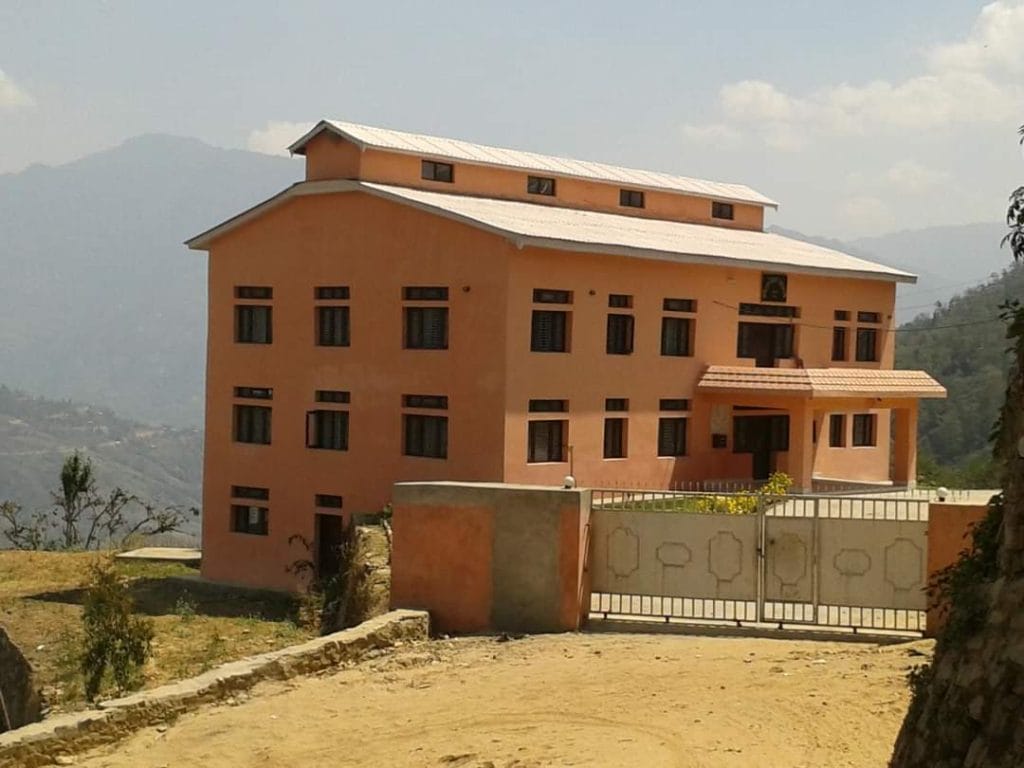
For individuals seeking legal remedies, understanding the Khotang District Court procedure is essential. The process was designed to ensure fair trials while maintaining judicial efficiency. Cases are filed, registered, and processed through systematic stages that include mediation when appropriate. The court’s jurisdiction covers territorial boundaries of Khotang District, including Diktel Rupakot Majhuwagadhi Municipality and eight rural municipalities.
How Khotang District Court Jurisdiction is Determined
Jurisdiction is determined by several factors under Nepali law. Khotang District Court possesses pecuniary, territorial, and subject-matter jurisdiction over cases arising within its geographic boundaries.
Territorial jurisdiction includes:
- The area where the defendant resides
- The location where the dispute occurred
- The place where the disputed property is situated
- The temporary residence of the defendant with ward office recommendation
Pecuniary jurisdiction follows the standard Nepal court fee structure. Cases with claims below certain thresholds may be referred to local judicial committees, while the district court handles higher-value disputes. The following table outlines the court fee structure applicable at Khotang District Court:
| Claim Amount (NPR) | Court Fee | Additional Notes |
|---|---|---|
| Up to 25,000 | Rs. 500 | Fixed fee regardless of claim value |
| 25,001 – 50,000 | 5% of claim | Percentage calculated on total amount |
| 50,001 – 100,000 | 3.5% of claim | Graduated rate structure |
| 100,001 – 500,000 | 2% of claim | Standard rate for most property disputes |
| 500,001 – 2,500,000 | 1.5% of claim | Applies to higher-value civil cases |
| Above 2,500,000 | 1% of claim | Maximum applicable rate |
Case Filing Procedure at Khotang District Court
The case filing process at Khotang District Court follows established procedures that must be carefully followed to ensure acceptance. The procedure differs for civil and criminal matters.
Civil Case Filing Steps
- Plaint drafting: A formal written complaint (FIRAD PATRA) is prepared containing names, addresses of parties, factual dispute details, legal grounds, and relief sought. Legal provisions supporting the claim are cited.
- Document collection: Supporting evidence is gathered, including contracts, property deeds, citizenship certificates, photographs, witness lists, and financial records.
- Jurisdiction verification: The appropriate court is determined based on territorial rules. For Khotang District Court cases, the defendant’s residence or dispute location must fall within Khotang District boundaries.
- Submission to filing section: The plaint is submitted to the Bhishi Heralne (Filing Desk) at the court’s registry. Court staff reviews documents for compliance with procedural requirements.
- Fee payment: Court fee stamps are purchased based on the claim amount using the fee structure table above. Payment is made at the designated revenue counter.
- Case registration: Upon acceptance, a diary number is issued, followed by a formal case registration number. The case is entered into the daily cause list and assigned to a judge’s bench.
- Summons issuance: Notice is served to the defendant by court officials or law enforcement personnel. Proper service is critical for case progression.
- Defendant response: Written statements must be filed within 21 days of notice service, extendable to 36 days with court permission. Allegations not explicitly denied are considered admitted.
- Mediation referral: Many civil cases are referred to mediation. Khotang District Court maintains a panel of certified mediators who facilitate settlement discussions.
- Trial and judgment: If mediation fails, evidence is presented, witnesses are examined, and final arguments are heard before judgment is rendered.
Criminal Case Filing Steps
Criminal cases follow a different path. The process begins with FIR registration at the nearest police station within Khotang District. Police investigate, collect evidence, and forward findings to the District Government Attorney. The attorney reviews evidence and files a charge sheet in Khotang District Court within 15-30 days if sufficient evidence exists.
Charge sheet contents include case summary, accused details, legal sections applied, witness list, and investigation findings. After filing, the court schedules bail hearings, takes suspect statements, and proceeds with trial if the case is not dismissed.
Role of Mediation at Khotang District Court
Mediation is strongly encouraged by Khotang District Court as an alternative dispute resolution method. The court refers appropriate civil cases to mediation to reduce backlog and provide faster resolutions.
Mediation process:
- A certified mediator is appointed from the court’s panel
- Parties meet in separate sessions and joint sessions
- Settlement agreements are drafted if consensus is reached
- Agreements are submitted to court for approval and become legally binding
- If mediation fails, the case returns to the regular trial track
Benefits of mediation:
- Cases are resolved 40-60% faster than trial
- Costs are significantly reduced
- Relationships between parties can be preserved
- Solutions are crafted by the parties themselves
Key Documents Required for Khotang District Court Filing
Proper documentation is essential for case acceptance. The following checklist should be used:
Mandatory documents:
- Original citizenship certificate of plaintiff (and defendant if available)
- Marriage certificate for family cases
- Property ownership documents for land disputes
- Contract agreements for commercial disputes
- Medical reports for injury or domestic violence cases
- Four passport-sized photographs of plaintiff
- Court fee stamps based on claim value
Civil case-specific documents:
- Detailed plaint with verification clause
- List of witnesses with contact information
- Supporting evidence (letters, receipts, bank statements)
- Land revenue office certificates for property matters
Criminal case-specific documents:
- FIR copy from police station
- Police investigation report
- Medical examination reports
- Witness statements recorded by police
- Evidence seizure lists
Timeline Expectations for Khotang District Court Cases
Case duration varies based on complexity, evidence availability, and court workload. The following table provides realistic timelines:
| Case Type | Simple Cases | Complex Cases | Average Duration |
|---|---|---|---|
| Mutual consent divorce | 2-3 months | 4-6 months | 3-4 months |
| Contested divorce | 8-12 months | 18-24 months | 12-18 months |
| Property partition | 6-9 months | 12-18 months | 9-12 months |
| Contract disputes | 4-6 months | 8-12 months | 6-9 months |
| Personal injury | 3-5 months | 9-12 months | 6-9 months |
| Criminal (minor) | 2-4 months | 6-9 months | 4-6 months |
| Criminal (serious) | 6-9 months | 12-18 months | 9-12 months |
Factors affecting timeline:
- Number of witnesses requiring examination
- Need for expert opinions (handwriting, forensic, valuation)
- Defendant’s response time and cooperation
- Mediation participation and success
- Court calendar availability
- Appeals to higher courts
Appeals Process from Khotang District Court Decisions
Parties dissatisfied with Khotang District Court judgments have the right to appeal. The appellate process follows these stages:
First appeal: Filed with the Koshi Province High Court (Biratnagar bench) within 35 days of judgment. The High Court reviews facts and law, may admit additional evidence, and can modify or reverse the district court decision.
Second appeal: Filed with the Supreme Court if the High Court imposes imprisonment of 10+ years or if substantial questions of law exist. Supreme Court review is limited to legal questions in most cases.
Execution of judgment: Khotang District Court handles judgment enforcement for civil cases. Section 229-253 of National Civil Procedure Code 2074 governs execution procedures, including property attachment, bank account seizure, and appointment of commissioners.
Practical Challenges at Khotang District Court
Several challenges are faced by litigants at Khotang District Court:
Case backlog: As of 2024, Nepal’s district courts collectively faced 104,430 pending cases. While Khotang District Court handles fewer cases than busy Kathmandu courts, backlog still causes delays.
Geographic accessibility: Khotang’s hilly terrain makes court access difficult for rural residents. Travel from remote villages to Diktel can take several hours.
Limited resources: The court operates with limited staffing. Only 37 judges serve against authorized 43 positions in comparable district courts.
Implementation difficulties: Recovering fines and enforcing judgments remains problematic. Nationally, Rs 19.39 billion in fines remain unrecovered.
Mediation underutilization: Only 14% of referred cases settle through mediation in similar courts, indicating need for better promotion.
Local Legal Resources for Khotang District Court
Several legal professionals practice before Khotang District Court:
Advocates available in Khotang:
- Advocate Mr. Devraj Thulung
- Advocate Mr. Narayan Das Rai
- Advocate Mr. Kabirkaji Rai
- Advocate Mr. Bimal Kaji Shrestha
- Advocate Mr. Kul (additional advocates available through Nepal Bar Association)
Contact information:
- Khotang District Court address: Diktel, Khotang District, Koshi Province, Nepal
- Phone: 036-420095 / 036-420195
- Email: info.dckhotang@supremecourt.gov.np
- Official website: supremecourt.gov.np/court/khotangdc
District Administration Office (for related matters):
- CDO: Shaligram Sharma Paudel
- Email: daokhotang.moha.gov.np
Frequently Asked Questions about Khotang District Court
Q: What is the exact location of Khotang District Court?
A: The court is located in Diktel, the district headquarters of Khotang, in Koshi Province. The complete address is Khotang District Court, Diktel, Khotang District, Nepal.
Q: How long does a divorce case take at Khotang District Court?
A: Mutual consent divorce is typically completed in 2-3 months. Contested divorce cases average 12-18 months depending on evidence complexity and witness availability.
Q: What are the court fees for property disputes?
A: Fees are calculated based on claim value: Rs 500 for claims up to Rs 25,000, 5% for Rs 25,001-50,000, 3.5% for Rs 50,001-100,000, 2% for Rs 100,001-500,000, 1.5% for Rs 500,001-2,500,000, and 1% for amounts exceeding Rs 2,500,000.
Q: Can cases be filed without a lawyer at Khotang District Court?
A: Yes, individuals can file cases personally. However, legal drafting errors may cause delays or rejection. Legal counsel is strongly recommended for complex matters.
Q: How is mediation arranged at Khotang District Court?
A: Mediators are appointed from the court’s certified panel. Cases are referred to mediation either by court order or party request. Settlement agreements reached in mediation require court approval to become enforceable.
Q: What is the deadline for filing appeals?
A: Appeals to the High Court must be filed within 35 days of judgment. Supreme Court appeals have similar deadlines depending on the case type.
Q: Which High Court hears appeals from Khotang District Court?
A: Appeals are heard by the Koshi Province High Court, Biratnagar Bench, which has territorial jurisdiction over Khotang District.
Q: How can I check my case status at Khotang District Court?
A: Case status can be checked by contacting the court registry at 036-420095 or visiting the court in person with your case registration number. Some information may be available through the Supreme Court website.
Q: Are there free legal aid services available?
A: Nepal Bar Association provides limited free legal aid to eligible individuals. Inquire at the court registry or contact local advocate associations for assistance.
Q: What types of cases does Khotang District Court handle?
A: The court handles all civil cases (property, contract, family, divorce, compensation) and criminal cases (theft, assault, fraud, domestic violence) that occur within Khotang District boundaries.
Action Steps for Khotang District Court Cases
For individuals requiring legal action in Khotang, these steps are recommended:
- Consult local counsel: Contact advocates listed above or Nepal Bar Association for guidance specific to your case type.
- Prepare documentation: Gather all citizenship certificates, property papers, contracts, and evidence before visiting the court.
- Verify jurisdiction: Confirm that your case falls within Khotang District Court territorial boundaries to avoid rejection.
- Consider mediation: Evaluate whether your dispute is suitable for mediation for faster, less costly resolution.
- Budget appropriately: Calculate court fees using the fee structure table and budget for advocate fees if legal representation is retained.
- Monitor case progress: Maintain regular contact with the court registry and your advocate to ensure timely progression.
- Prepare for delays: Understand that case backlog affects all Nepali courts. Patience and realistic timeline expectations are necessary.
For immediate assistance with Khotang District Court matters, contact the court registry at 036-420095 during business hours (Sunday-Friday, 10 AM – 4 PM). Walk-in consultations with court staff are available for procedural questions, though legal advice should be obtained from licensed advocates. Contact Law Firm in Nepal for legal representation at Khotang District Court.
References
- Khotang District Court Official Information
- Supreme Court of Nepal – District Courts Directory
- Nepal Law Commission – Muluki Civil Code 2074
- Nepal Bar Association – Advocate Directory
- Khotang District Administration Office
- Constitution of Nepal 2015 – Judicial Provisions
- National Civil Procedure (Code) Act, 2017
- Koshi Province High Court, Biratnagar Bench
Legal Disclaimer: This guide is provided for informational purposes only and does not constitute legal advice. Facts and procedures are based on publicly available information as of January 2026. Court procedures and personnel may change. For specific legal matters, consultation with a licensed Nepali advocate is strongly recommended.