
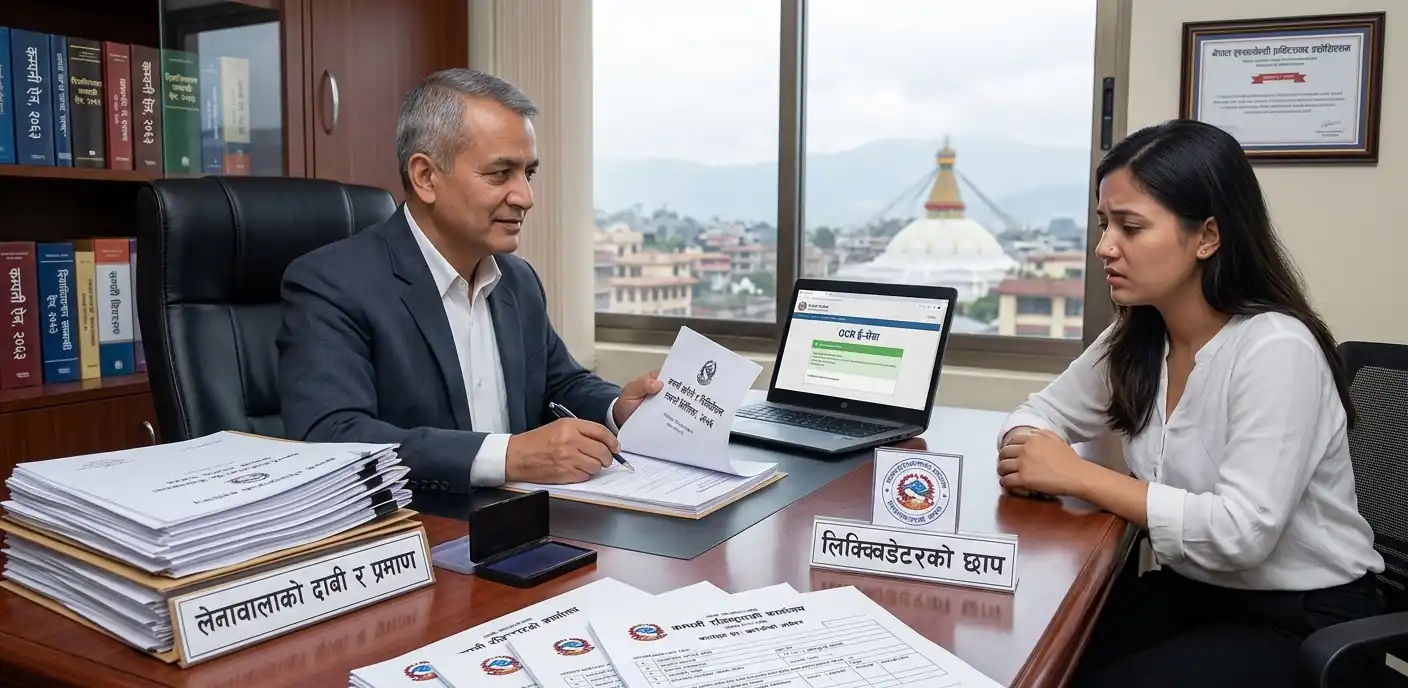
Company winding up in Nepal is the legal process of formally closing a company by settling its liabilities, distributing remaining assets, and removing its name from the official register.
This service is essential when a business is no longer viable, has fulfilled its purpose, or shareholders decide to cease operations. Without proper winding up, companies remain legally active and exposed to ongoing compliance obligations and potential liabilities.
In practice, the process involves regulatory filings, creditor settlements, tax clearance, and final approval from the Office of the Company Registrar. Each step must be handled carefully to avoid delays or legal complications.
Key Takeaways
- Company winding up Nepal involves legally closing a business and removing it from the registrar
- The Office of the Company Registrar oversees company dissolution
- The process includes settlement of debts, tax clearance, and regulatory filings
- Timeline depends on documentation accuracy and creditor settlement
- Common for inactive companies, failed ventures, or completed project entities
How We Help
At CorporateBizLegal, we guide clients through the entire company liquidation process with a focus on legal compliance and risk management.
Our role includes advising on the appropriate closure method, preparing required resolutions and documents, coordinating with regulatory authorities, and ensuring that liabilities are properly settled before final dissolution.
We also assist in dealing with tax authorities, creditor communications, and procedural filings. Where complications arise, such as disputes or incomplete records, we provide structured legal solutions to resolve them efficiently.
Who Needs This Service
- This service is typically required by different categories of clients, each facing distinct legal and commercial circumstances.
- Business owners with inactive companies often seek formal closure to avoid penalties for non-compliance. Startups that did not achieve viability may need liquidation to settle outstanding obligations.
- Established companies may require winding up due to restructuring, mergers, or strategic exit decisions. Foreign investors sometimes initiate liquidation when exiting the Nepalese market.
- In some cases, shareholders pursue winding up due to internal disputes or inability to continue operations effectively.
How the Process Works
- Internal decision to wind up the company
- Preparation and approval of shareholder resolutions
- Appointment of a liquidator if required
- Notification to regulatory authorities
- Settlement of liabilities and creditor claims
- Tax clearance from the Inland Revenue Department
- Submission of final documents to the Office of the Company Registrar
- Issuance of dissolution approval and removal from register
Documents Required
The exact documentation varies depending on the nature of the company and method of winding up, but generally includes:
- Board and shareholder resolutions approving winding up
- Company registration documents
- Financial statements and audit reports
- Tax clearance certificates
- Details of assets and liabilities
- Creditor list and settlement records
- Liquidator appointment documents if applicable
Specific requirement depends on the case and should be verified during consultation.
Timeline
The timeline for company liquidation in Nepal depends largely on how organized the company’s records are and whether liabilities are fully settled.
Initial approvals and documentation preparation may take a few weeks. Tax clearance often takes additional time, especially if filings are incomplete or under review.
Final approval from the registrar depends on whether all compliance requirements are satisfied. Delays are common when documents are inconsistent or creditor issues remain unresolved.
Cost Factors
Legal and procedural costs depend on several variables rather than a fixed structure.
Government fees for filings and approvals apply at different stages. Professional fees vary depending on the complexity of the company’s financial and legal situation.
Costs increase when companies have unresolved tax matters, disputes among shareholders, or incomplete accounting records that require reconstruction.
Detailed Process Explanation
- The process begins with an internal decision, usually through a board and shareholder resolution. This step must be properly documented because regulators scrutinize whether the decision complies with company law and internal governance rules.
- Once approved, the company must notify relevant authorities. This includes filing initial documents with the Office of the Company Registrar, which oversees company registration and dissolution in Nepal.
- A critical stage is settling liabilities. Creditors must be identified and paid, and disputes must be resolved. In practice, this is where many cases face delays, particularly when companies have poor financial records.
- Tax clearance from the Inland Revenue Department is another key requirement. Authorities verify that all tax filings and payments are complete before allowing dissolution.
- Finally, the company submits closure documents for approval. If everything is in order, the registrar issues a formal dissolution decision and removes the company from its records.
Legal Framework
- Company winding up and liquidation in Nepal is governed by the Companies Act and related regulatory procedures.
- The Office of the Company Registrar is responsible for approving company dissolution and maintaining the official register of companies.
- The Inland Revenue Department plays a critical role by issuing tax clearance, confirming that the company has fulfilled its tax obligations.
- Where insolvency or disputes are involved, additional legal provisions may apply. Specific requirement depends on the case and should be verified during consultation.
Common Mistakes
- One of the most frequent issues is attempting to close a company without settling tax obligations. This leads to immediate rejection of applications.
- Incomplete financial records also create delays. Many companies fail to maintain updated accounts, making it difficult to verify liabilities and assets.
- Another common mistake is ignoring creditor claims. Even small unresolved liabilities can prevent the winding up process from moving forward.
- Improperly drafted resolutions or missing approvals can also result in rejection at the registrar level.
What Clients Receive
Clients receive structured legal guidance tailored to their company’s situation.
We provide properly drafted resolutions, complete documentation for filing, and coordinated submission to relevant authorities.
Clients also receive compliance guidance to ensure that all liabilities, including tax obligations, are addressed before closure.
The final outcome is a legally dissolved company with no ongoing compliance exposure.
Regulatory and Compliance Context
Winding up a company involves interaction with multiple regulatory bodies.
The Office of the Company Registrar handles registration and dissolution approvals. The Inland Revenue Department ensures tax compliance before closure.
Depending on the nature of the business, additional regulators may be involved. For example, companies engaged in foreign investment may need to coordinate with Nepal Rastra Bank for capital-related matters.
Compliance does not end with dissolution. Proper closure ensures that directors and shareholders are not exposed to future legal or financial liabilities.