
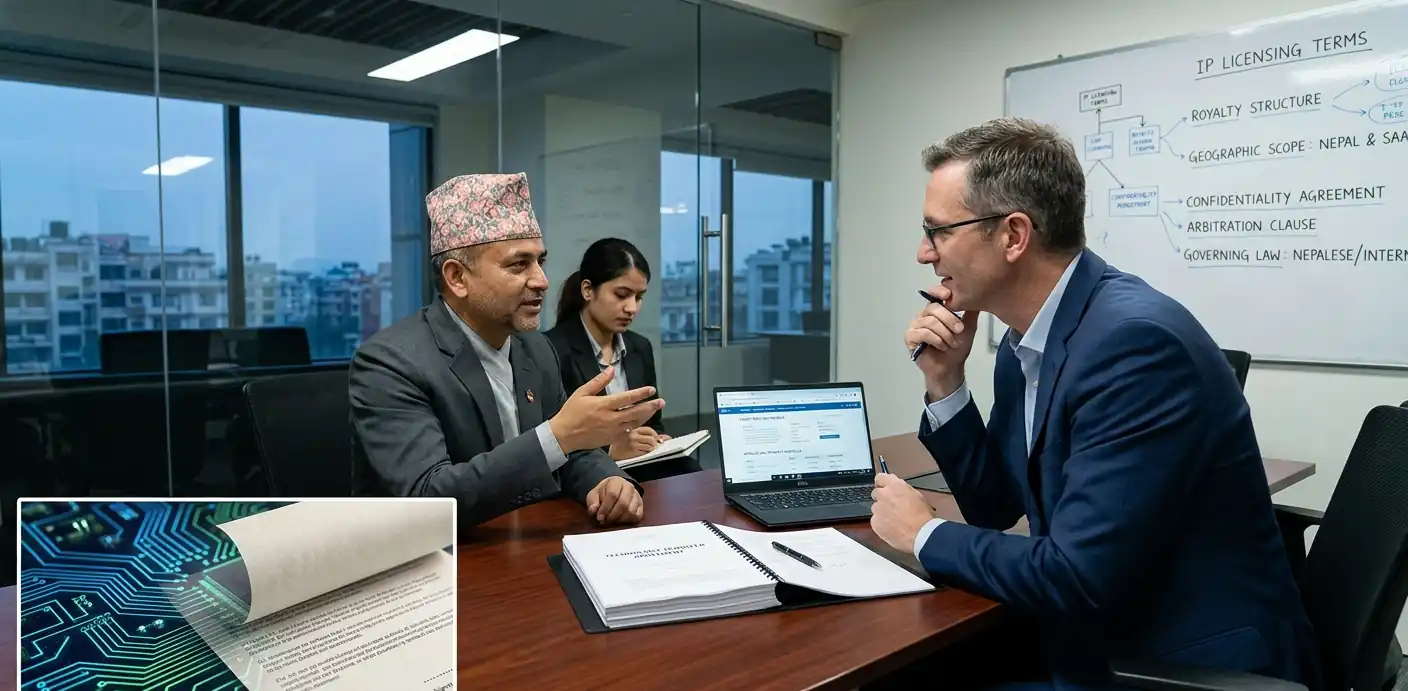
Technology transfer agreement drafting in Nepal is the legal process of structuring and documenting the transfer or licensing of technology, know-how, or intellectual property from one party to another under enforceable contractual terms.
This service is essential for foreign investors, multinational companies, and Nepali businesses entering into licensing, technical collaboration, or know-how transfer arrangements. A poorly structured agreement can lead to regulatory rejection, tax exposure, or loss of intellectual property control. The objective is not only to document commercial terms but to ensure compliance with Nepal’s foreign investment and intellectual property framework.
In practice, these agreements often intersect with foreign direct investment approvals, royalty payments, and sector-specific restrictions. This makes careful legal structuring critical from the outset.
Key Takeaways
- Technology transfer agreements govern licensing of technology, trademarks, patents, or technical know-how
- Agreements often require approval from the Department of Industry for foreign investment-related transactions
- Regulatory compliance affects royalty payments, tax treatment, and enforceability
- Typically required by foreign investors, joint ventures, and companies importing technology
- Timeline depends on regulatory review and documentation accuracy
How We Help
- At CorporateBizLegal, we advise clients on structuring technology transfer arrangements that align with both commercial objectives and regulatory requirements in Nepal.
- Our work begins with understanding the nature of the technology and the business model behind the transaction. We then draft or review agreements to address licensing scope, royalty mechanisms, confidentiality obligations, and termination rights.
- Where required, we assist in preparing submissions to the Department of Industry, which oversees foreign investment approvals, including technology transfer arrangements linked to FDI. We also coordinate with the Inland Revenue Department on tax-related implications, particularly where cross-border payments are involved.
- Our role extends beyond drafting. We identify risks early, especially around intellectual property ownership, regulatory restrictions, and payment structures that may trigger compliance issues.
Who Needs This Service
- Foreign investors entering Nepal through licensing or technical collaboration arrangements require properly structured agreements to secure regulatory approval and protect their intellectual property.
- Nepali companies acquiring foreign technology, whether in manufacturing, IT, or services, need legally compliant contracts to ensure uninterrupted operations and lawful royalty payments.
- Joint ventures often rely on technology transfer agreements to define how proprietary systems, processes, or trademarks are shared between partners.
- Startups and growing enterprises may also require such agreements when partnering with international technology providers.
How the Process Works
- Initial consultation and transaction assessment
- Structuring of licensing or technology transfer terms
- Drafting or reviewing the agreement
- Alignment with foreign investment and regulatory requirements
- Submission for approval if required
- Finalization and execution of the agreement
Documents Required
- Details of the parties involved, including incorporation documents
- Description of the technology or intellectual property being transferred
- Existing intellectual property registrations, if applicable
- Business plan or project proposal (for FDI-linked transactions)
- Proposed royalty or fee structure
- Board resolutions approving the transaction
- Identification documents of authorized signatories
Specific requirement depends on the case and should be verified during consultation.
Timeline
The drafting phase typically depends on the complexity of the transaction and negotiation between parties.
If regulatory approval is required, the timeline depends on review by the Department of Industry. Delays are common when documentation is incomplete or when the structure raises compliance concerns.
Execution can proceed quickly once approvals are obtained and both parties finalize terms.
Cost Factors
Legal costs vary depending on the complexity of the agreement, the number of parties involved, and whether regulatory approval is required.
Transactions involving cross-border licensing, royalty structuring, or intellectual property protections tend to require more detailed drafting and review.
Additional costs may arise from regulatory filings, translation requirements, or coordination with tax advisors.
Detailed Process Explanation
- The process usually begins with understanding the commercial arrangement. Many clients approach with a draft agreement prepared by a foreign party, but these often do not align with Nepal’s regulatory framework. Early legal review helps prevent rejection at the approval stage.
- Structuring is a critical step. The way royalties are defined, whether as fixed fees or percentage-based payments, can affect both regulatory approval and tax treatment. Misclassification here often leads to compliance issues later.
- Drafting requires careful attention to intellectual property rights. Agreements must clearly define ownership, usage rights, sublicensing permissions, and restrictions. Ambiguity in these clauses frequently leads to disputes.
- If the agreement is linked to foreign investment, submission to the Department of Industry becomes necessary. Applications are often delayed due to inconsistencies between the agreement and the approved business proposal.
- Final execution only occurs after aligning all regulatory, tax, and contractual elements. At this stage, even minor inconsistencies can cause delays, particularly in cross-border transactions.
Legal Framework
- Technology transfer agreements in Nepal are primarily governed by foreign investment laws and intellectual property principles.
- The Department of Industry plays a central role in approving foreign investment-related technology transfer arrangements. It ensures that agreements comply with national investment policies.
- The Inland Revenue Department regulates the tax treatment of royalty payments and cross-border transactions, which directly impacts how agreements must be structured.
- Specific legal provisions may vary depending on the sector and nature of the technology involved. Specific requirement depends on the case and should be verified during consultation.
Common Mistakes
- Many clients rely on foreign-drafted agreements without adapting them to Nepal’s legal environment. This often leads to regulatory rejection or unenforceable provisions.
- Another common issue is unclear definition of intellectual property rights. Without precise clauses, disputes over ownership and usage rights become difficult to resolve.
- Royalty structures are frequently misunderstood. Incorrect structuring can trigger unexpected tax liabilities or compliance issues.
- Incomplete documentation is another frequent cause of delay, especially when applying for regulatory approval.
What Clients Receive
Clients receive a legally structured technology transfer agreement aligned with Nepal’s regulatory framework.
This includes tailored contractual clauses covering licensing scope, payment mechanisms, confidentiality, and termination conditions.
We also provide advisory on regulatory approvals, tax implications, and compliance requirements to ensure the agreement is enforceable and operationally effective.
Regulatory and Compliance Context
- Technology transfer agreements often operate within a broader compliance framework involving multiple authorities.
- The Department of Industry reviews and approves agreements linked to foreign investment and ensures consistency with approved business activities.
- The Inland Revenue Department oversees taxation of royalties and cross-border payments, which must align with the agreement terms.
- In certain cases, coordination with Nepal Rastra Bank may be required for foreign currency transactions related to royalty payments.
- Understanding how these authorities interact is essential for structuring agreements that function smoothly in practice.