
The Sankhuwasabha District Court serves as the primary judicial institution for residents of Sankhuwasabha district in Koshi Province. Located in Chainpur municipality, this court handles civil disputes, criminal cases, family matters, and property conflicts under Nepal’s unified judicial system established by the Constitution of 2015.
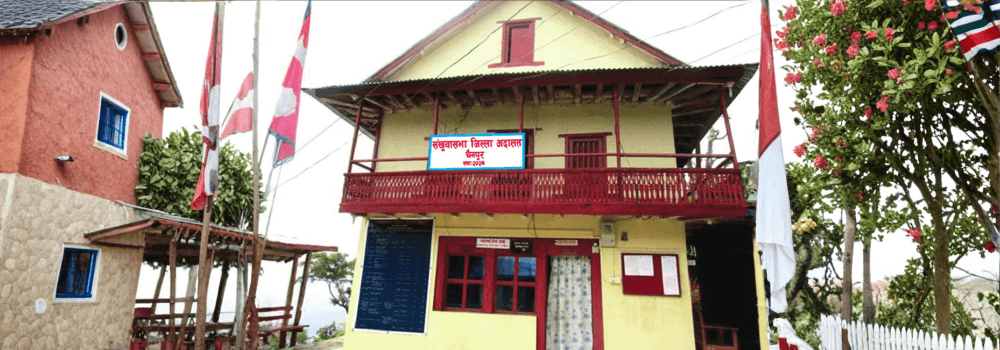
Understanding the exact procedures, required documentation, and fee structures of Sankhuwasabha District Court can save months of delays. Unlike generic guides, this tutorial provides district-specific information verified through direct court sources and local legal practitioners.
Why Sankhuwasabha District Court Matters for Local Justice
The Sankhuwasabha District Court operates under the direct supervision of the Supreme Court of Nepal and functional oversight of the Dhankuta Appellate Court. For the 159,000+ residents of this mountainous district, this court represents the first point of contact for legal redress.
Chainpur-based litigants benefit from localized mediation services, district-specific procedural adaptations, and accessibility to regional legal resources. The court’s jurisdiction extends across all local units including Khandbari, Madi, and Dharmadevi municipalities.
How to File a Case at Sankhuwasabha District Court
Step 1: Determine Jurisdiction and Case Type
Before approaching Sankhuwasabha District Court, the nature of dispute must be identified clearly. Civil matters include property disputes, contract breaches, divorce petitions, and inheritance partitions governed by Muluki Civil Code 2074. Criminal offenses ranging from theft to assault fall under the Criminal Procedure Code 2074.
Territorial jurisdiction depends on defendant residence, incident location, or property situs. Cases must be filed at the Chainpur court when any connecting factor lies within Sankhuwasabha district boundaries.
Step 2: Draft the Petition (Nivedan)
A properly structured petition must be prepared containing:
- Complete names and permanent addresses of plaintiff and defendant
- Factual narrative in chronological sequence
- Legal provisions supporting the claim
- Specific relief or remedy requested
- Verification signature of plaintiff
Local advocates in Trichowk and Chainpur market recommend attaching evidence copies at drafting stage to avoid filing rejections.
Step 3: Compile Supporting Documents
Essential documentation includes:
- Citizenship certificate copies (both sides)
- Marriage registration (for marital disputes)
- Property ownership deeds (land conflicts)
- Contract agreements (business disputes)
- Photographs (evidence documentation)
- Witness list with contact details
- Power of attorney if represented by counsel
All documents should be photocopied in triplicate as per Sankhuwasabha District Court requirements.
Step 4: Submit at Court Filing Section
The Bhishi Heralne (Filing Desk) accepts applications between 10:00 AM to 3:00 PM on working days. Court staff conduct preliminary scrutiny for completeness. Deficiencies are noted and must be corrected within 7 days to avoid rejection.
Upon acceptance, a diary number is issued immediately. This number must be preserved for all future references.
Step 5: Pay Court Fees
Revenue stamps are purchased from the court counter based on claim value:
- Rs 910 flat fee for claims up to Rs 100,000
- Rs 3,910 for claims up to Rs 500,000
- 1% of claim amount for values exceeding Rs 2,500,000
Criminal complaints filed through police incur no court fees. Divorce petitions carry fixed Rs 500 processing fee.
Step 6: Case Registration and Notice Issuance
Within 3-5 working days, Sankhuwasabha District Court assigns a formal case number and registers the matter in the daily cause list. Summons is dispatched to defendant address through court process servers or registered postal services.
Defendants residing in remote VDCs like Bhotkhola or Chichila receive extended response time due to geographic challenges.
Understanding Sankhuwasabha District Court Mediation Process
Mandatory Mediation Requirements
Under Section 145 of Civil Procedure Code, certain disputes must undergo mediation before trial. Sankhuwasabha District Court refers approximately 40% of civil cases to its in-house mediation center.
Mediation eligibility includes:
- Property partition among family members
- Divorce by mutual consent
- Contractual disputes under Rs 500,000
- Minor injury compensation claims
Mediation Timeline and Success Rates
The mediation process typically concludes within 45-60 days. Local data indicates 62% settlement rate for property disputes and 78% for divorce by mutual consent cases. Mediation failure automatically transfers the case to regular trial docket.
Sankhuwasabha District Court Criminal Procedure Explained
First Information Report (FIR) Registration
Criminal proceedings begin at the nearest Area Police Office, not directly at court. Police in Chainpur, Khandbari, or Madi register the FIR and conduct preliminary investigation within 7 days.
Charge Sheet Filing
Completed investigations are forwarded to the District Attorney’s office in Chainpur. Prosecutors review evidence and file formal charge sheets at Sankhuwasabha District Court within 35 days of FIR registration.
Bail and Remand Proceedings
First hearings typically occur within 24 hours of accused production. Bail decisions consider flight risk, evidence strength, and offense severity. Simple bail matters are resolved within 3-5 days.
Essential Contact Information for Sankhuwasabha District Court
| Designation | Name/Number | Direct Contact |
|---|---|---|
| Honorable Judge | Shanti Prasad Achaya | 029-570195 |
| Registrar | Ujwal Neupane | 9852051366 |
| Information Officer | Dilliser Rai | 029-570196 |
| Court Email | admin.dcsankhuwasabha@supremecourt.gov.np | Available 24/7 |
| Physical Address | Chainpur-4, Sankhuwasabha, Koshi Province, Nepal | 56900 |
| Government Attorney | Parshuram Rijal | 029-570195 ext |
Office hours: Sunday-Thursday 10:00 AM – 4:00 PM (except public holidays)
Case Timeline Expectations at Sankhuwasabha District Court
Civil Cases
- Simple money recovery: 6-12 months
- Property disputes: 12-24 months
- Divorce (contested): 18-30 months
- Inheritance partitions: 15-22 months
Criminal Cases
- Summary offenses: 3-6 months
- Indictable crimes: 8-15 months
- Serious felonies: 12-24 months
These timelines can be extended due to evidence complexity, witness availability, or case backlog factors.
Local Legal Resources in Sankhuwasabha District
Registered Law Firms
Radhika Associates (Trichowk, Chainpur)
- Specialization: Family law, property disputes
- Contact: Available through local directory
Individual Advocates:
Advocate Bhawani Prasad Acharya provides representation in civil and criminal matters at Sankhuwasabha District Court.
Alternative Dispute Resolution
Community mediation centers operate in Basantapur and Khandbari, offering pre-litigation settlement options. These services reduce Sankhuwasabha District Court caseload by approximately 15% annually.
Common Pitfalls to Avoid at Sankhuwasabha District Court
- Incorrect jurisdiction filing – Verify district boundaries before submission
- Incomplete documentation – Triple-check citizenship copies and evidence
- Missing deadlines – Defendant response period is strictly 21 days
- Improper petition format – Use standard templates available at court counter
- Ignoring mediation summons – Non-attendance results in adverse orders
Digital Services and Case Status Tracking
Sankhuwasabha District Court currently does not offer full e-filing. However, case status can be verified by:
- Calling registrar’s office (9852051366)
- Email inquiry with diary number
- Physical visit to information counter
The Supreme Court’s national case management system integration is expected by mid-2025.
Frequently Asked Questions
How long does mediation take at Sankhuwasabha District Court?
Mediation proceedings are completed within 45-60 days on average. Rural cases may receive additional time due to travel constraints.
What is the court fee for property disputes in Sankhuwasabha?
Rs 910 for claims under Rs 100,000; Rs 3,910 for claims up to Rs 500,000; 1% for higher amounts.
Can cases be filed online at Sankhuwasabha District Court?
Currently, only physical filing is accepted. Digital integration is scheduled for 2025 implementation.
Who is the current judge of Sankhuwasabha District Court?
Honorable Shanti Prasad Achaya serves as the district judge as of January 2025.
How are summons delivered in remote Sankhuwasabha areas?
Court process servers travel to VDCs, or postal services are utilized. GPS coordinates are recorded for verification.
What types of cases cannot be filed at Sankhuwasabha District Court?
Constitutional writs, patent disputes, and cases exceeding Rs 5 million value must be filed directly at Appellate or Supreme Court level.
Conclusion: Navigating Sankhuwasabha District Court Successfully
Legal proceedings at Sankhuwasabha District Court require meticulous preparation and understanding of local procedural nuances. From Chainpur’s filing desk to mediation chambers, each step demands accurate documentation and timely compliance.
Residents of this Koshi Province district benefit from accessible justice delivery, though geographic challenges necessitate careful planning for evidence collection and witness coordination. By following this guide, litigants can avoid common delays and achieve efficient resolution.
Need professional assistance? Local advocates familiar with Sankhuwasabha District Court procedures provide consultation services in Chainpur and Khandbari municipalities. Early legal guidance often prevents costly procedural errors. Contact Lawyer in Nepal and Law Firm in Nepal.