
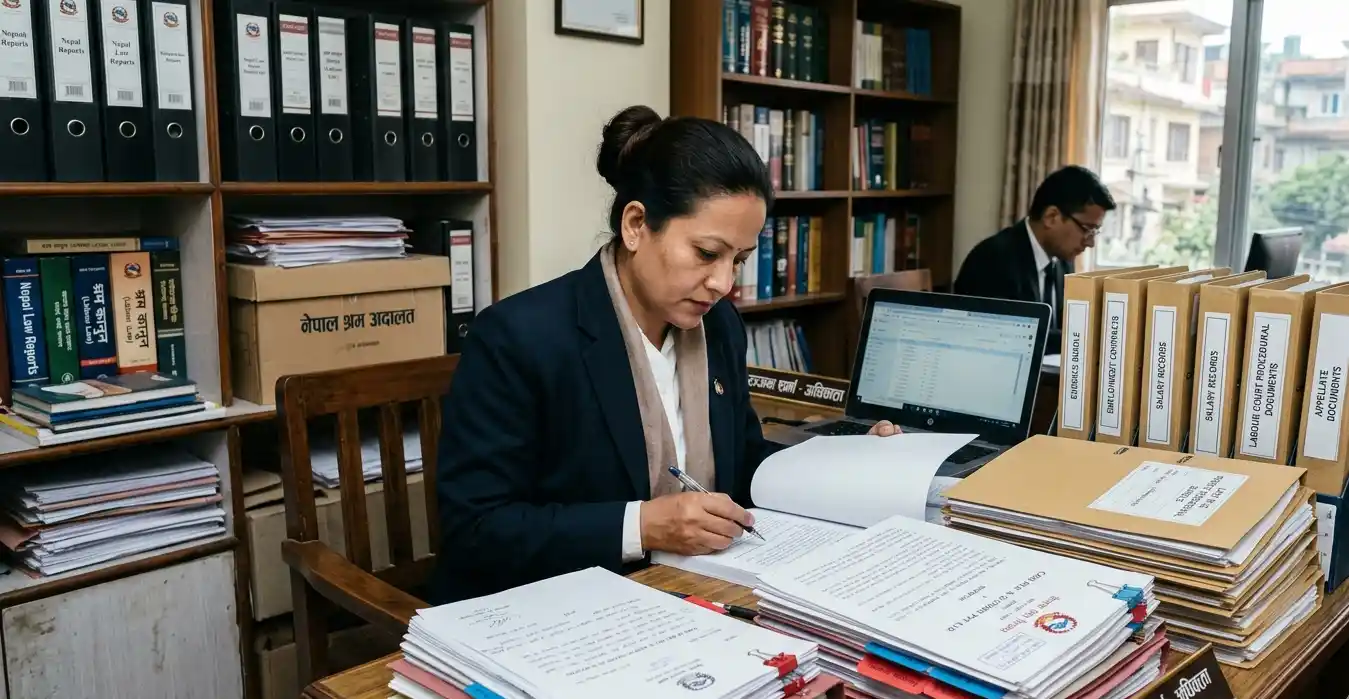
Facing a labour dispute in Nepal can disrupt your business and employee relations. Our firm provides experienced Labour Court representation, ensuring your rights and obligations are handled correctly under the Labour Act, 2074. Ignoring procedural rules or worker entitlements can result in considerable financial penalties and damage to your reputation, making skilled legal help essential.
TL;DR: Labour Court representation in Nepal involves advocating for either employers or employees in legal disputes concerning employment matters under the Labour Act, 2074. Our firm assists clients in navigating these complex proceedings to protect their rights and achieve favourable resolutions.
Understanding Labour Court Representation in Nepal
Labour Court representation in Nepal means advocating for employers or employees in legal proceedings about employment disagreements, as outlined in the Labour Act, 2074 (2017). These courts decide on matters like unfair dismissal, unpaid wages, violations of working conditions, and collective bargaining disputes. The process aims to settle conflicts using a clear legal structure, ensuring Nepali labour laws are followed and protecting everyone’s rights.
When to Engage a Labour Court Lawyer in Nepal
- Wrongful Termination Claims: If an employee claims unfair dismissal or termination without the employer following the mandatory show-cause notice and inquiry process required by the Labour Act, 2074.
- Unpaid Wages or Benefits Disputes: When disagreements arise over salary, overtime pay, gratuity, or other legal benefits due to workers.
- Disputes Over Working Conditions: If an employer is accused of not meeting health, safety, or working hour regulations set by Nepali law.
- Collective Bargaining Conflicts: When trade unions and management cannot agree on collective bargaining terms or worker representation rights.
- Disciplinary Action Challenges: If an employee disputes disciplinary actions or penalties taken by the employer.
Navigating the Labour Court Process in Nepal
The path to resolving a labour dispute in Nepal typically starts with a mandatory conciliation attempt at the Department of Labour before a case can go to the Labour Court.
- Conciliation at the Department of Labour: All labour disputes must first be brought for mediation and conciliation at the relevant Labour Office. This step is intended to achieve a settlement outside of court.
- Filing a Case: If conciliation fails, a formal case can be filed with the Labour Court. This requires preparing a detailed petition that explains the facts, legal basis, and what you are asking the court to do.
- Summons and Response: The Labour Court will notify the other party, who then has a set time to submit their defence or counter-argument. Delays in serving summons can occur if addresses are not precise.
- Evidence Presentation: Both sides present documents and call witnesses to support their claims. This requires careful organisation of employment records and compliance documents. Inconsistent documentation is a common problem here.
- Arguments and Hearing: Lawyers for both parties present their arguments based on the evidence and Nepali law. Sometimes, regulators may request clarification on specific points before a hearing.
- Judgment: The Labour Court issues a decision based on the evidence, legal arguments, and its understanding of the Labour Act, 2074.
- Appeal: Parties unhappy with the Labour Court’s decision can appeal to higher courts, such as the High Court. This adds significant time and cost.
How Our Labour Court Lawyers Support Your Case
Our team understands the intricacies of the Labour Court system in Nepal. We carefully review employment contracts and company policies to spot compliance issues and potential dispute triggers. Our lawyers are skilled in preparing legal filings and evidence, ensuring all arguments are based on the Labour Act, 2074 and relevant court decisions. We represent clients through all stages, from initial conciliation to the final judgment, working towards favourable outcomes. We’ve seen many cases delayed because of incomplete submissions or missing original documents.
employment contract drafting
Understanding Fees and Timelines for Labour Disputes
The cost and duration of Labour Court representation in Nepal depend on several factors. These include how complex the dispute is, the amount of evidence to review, the number of court hearings needed, and the specific claims made. Simple cases might finish in a few months, but more complicated disputes with multiple appeals can take a year or longer. Court backlogs or the need for additional investigation can also cause delays.
Common Mistakes and Compliance Risks for Businesses in Nepal
Businesses in Nepal often face problems by not strictly following the Labour Act, 2074. Common errors include poor documentation of disciplinary actions, making it hard to prove fair termination. Misunderstanding employee benefit rules, like provident fund contributions or overtime calculations, can lead to unexpected financial liabilities. Furthermore, skipping the mandatory conciliation step before filing a Labour Court case can result in the case being dismissed on a technicality. Making sure all employment contracts are written and comply with Nepali law is a key way to avoid trouble.
employee benefits compliance
What Clients Receive from Our Representation
Clients who use our Labour Court representation services get complete legal support for resolving disputes. This includes advice specific to their situation, carefully written legal documents, and strong representation in court. We ensure clear updates on case progress, possible results, and all required filings and documents for the Labour Court. Our goal is to provide dedicated advocacy focused on achieving the best possible legal outcome for your employment matters.
labour law compliance audit