
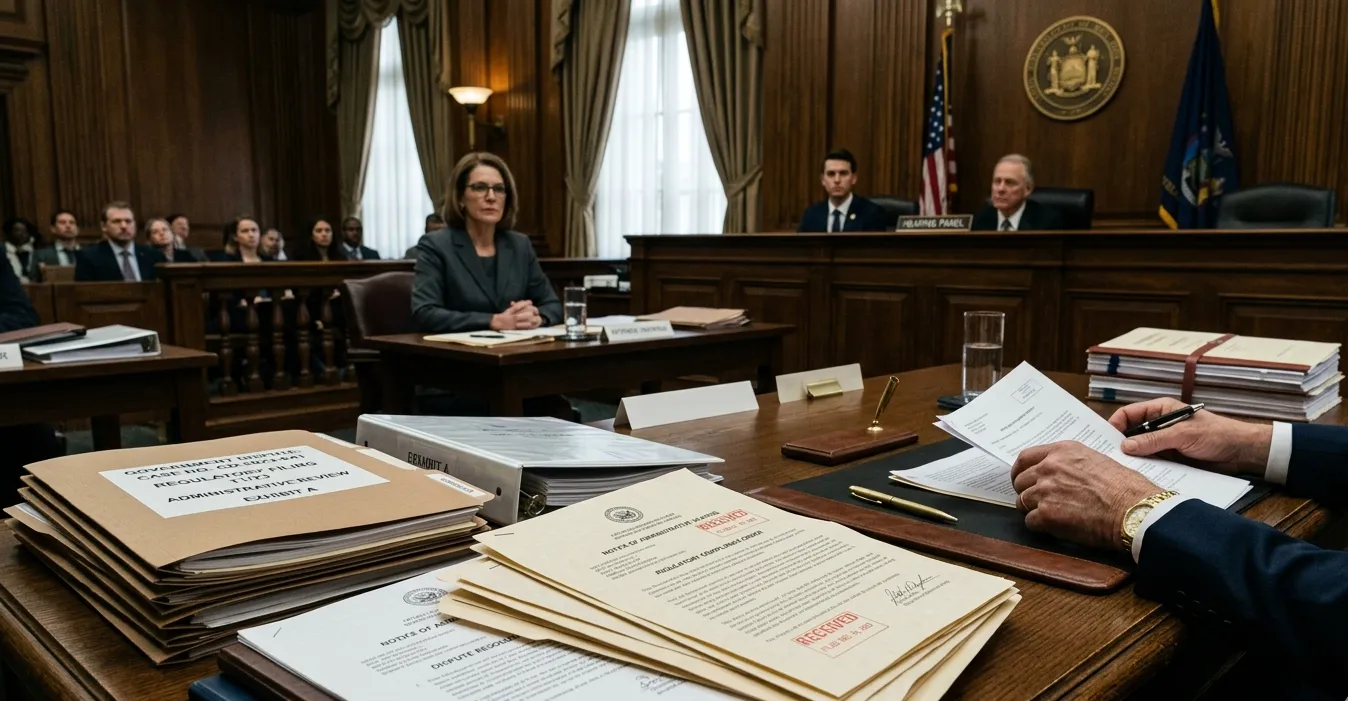
Administrative law in Nepal regulates how government agencies such as the Department of Industry, Inland Revenue Department, and Land Revenue Office make decisions that affect individuals and businesses, and provides mechanisms—primarily writ petitions under Article 133 of the Constitution to challenge unlawful refusals, delays, or penalties in courts.
TL;DR:
Administrative law lets you contest unlawful government decisions such as licence refusals or tax notices in Nepal’s courts. Our firm promptly files writ petitions, handles appeals, and secures enforcement to keep your operations running smoothly.
What does Administrative Law cover in Nepal?
Administrative law governs the interaction between private parties and state bodies, including licensing, tax assessment, land registration, and foreign investment approvals. It empowers parties to seek judicial review through certiorari, mandamus, or prohibition petitions before the Supreme Court, High Courts, or District Courts, as prescribed by the Civil Procedure Code, 2074.
When is legal representation essential for government disputes?
- Licence refusals or delays – If the Department of Industry or Nepal Rastra Bank denies a banking or investment licence, a writ petition may be required to compel action.
- Tax assessment challenges – When the Inland Revenue Department issues an additional tax notice that appears unlawful, an administrative lawyer can file a petition for review or appeal.
- Land title conflicts – Disputes with the Land Revenue Office over cadastral records often need a mandamus application to enforce proper registration.
- Foreign investment restrictions – If the Foreign Investment and Technology Transfer Act is invoked to block a foreign shareholder, specialist counsel can contest the decision before the Supreme Court. [INTERNAL LINK: foreign investment approval process → /foreign-investment/fdi-approval]
- Regulatory compliance notices – Notices of violation from the Department of Labour or the Department of Environment that threaten fines or shutdowns should be examined promptly for procedural defects.
How to navigate the writ petition process in Nepal
- Pre‑filing assessment – Review the government notice, gather original orders, translations, and notarizations, and confirm that the limitation period under the Muluki Civil Code has not expired. Early identification of missing documents prevents rejection at filing.
- Drafting the petition – Prepare a Nepali‑language petition citing Article 133 and the specific statutory provision (e.g., Income Tax Act). Attach all relevant correspondence and expert opinions.
- Filing with the appropriate court – National matters go to the Supreme Court; provincial issues are filed in the relevant High Court. Pay the filing fee and serve a copy on the Attorney General’s Office.
- Regulatory response – The agency must reply within the period set by court rules. Scrutinize the response for procedural lapses, such as failure to cite legal authority.
- Hearing and judgment – Present concise oral arguments, cross‑examine officials, and request interim relief (e.g., stay of enforcement). The court may issue a mandamus directing action or a certiorari quashing the original decision.
- Enforcement – If the agency ignores the judgment, file a contempt motion or seek execution through the District Court, coordinating with the Department of Administration as needed.
Practical ways our administrative lawyers protect your business
- Conduct a rapid legal audit of the government decision to spot procedural defects.
- File correctly formatted writ petitions that meet the Supreme Court’s original jurisdiction requirements.
- Manage service of notice on the Attorney General’s Office, a step often missed by untrained parties.
- Negotiate settlement orders or remedial directions during hearings to avoid prolonged litigation.
- Oversee post‑judgment enforcement, liaising with the relevant department to secure compliance.
Fees, timelines and what to expect
- Consultation – Billed hourly; typically 1–2 hours for an initial review.
- Petition drafting & filing – Fixed‑fee structures are common, ranging from NPR 150,000 to NPR 500,000 depending on complexity.
- Court advocacy – Hourly rates apply for oral arguments and any supplemental filings.
- Timeline – A straightforward mandamus petition to the Supreme Court usually takes 3–5 months; multi‑agency disputes can extend beyond a year due to additional clearances.
Common filing mistakes and how to avoid them
- Submitting incomplete applications – missing signatures or untranslated foreign documents lead to immediate rejection.
- Misstating company objectives – overly broad objectives in the Office of Company Registrar filing trigger later regulatory challenges. [INTERNAL LINK: company registration in Nepal → /corporate/company-registration]
- Ignoring statutory limitation periods – failing to act within the prescribed time under the Muluki Civil Code extinguishes the right to challenge.
- Overlooking inter‑agency dependencies – some licences require prior environmental clearance; proceeding without it results in revocation.
- Relying on informal approvals – verbal assurances from officials are not legally binding; formal written orders are essential.
What clients receive from our service
- A detailed legal memorandum outlining merits, risks, and recommended strategy.
- Fully compliant writ petitions and service documents filed with the appropriate court.
- Regular status reports tracking court orders, deadlines, and next steps.
- Copies of the final judgment and any enforcement orders or required licences.