

Table of Contents

Introduction
Starting a company in Nepal is one of the most important steps for entrepreneurs, start-ups, small businesses, foreign investors, and growing enterprises. Registering your business gives it legal recognition, protects owners through limited liability, improves credibility, enables tax registration, opens access to banking services, and allows participation in government and private sector opportunities.
Many first-time business owners are confused about where to begin, what documents are required, which government offices are involved, how much registration costs, and how long the process takes. This guide explains everything in simple language.
Whether you are planning to launch a technology start-up, consulting company, trading business, manufacturing enterprise, or foreign-invested company, this guide walks you through the company registration process in Nepal from start to finish.
Quick Answer: How Do You Register a Company in Nepal?
To register a company in Nepal, you generally need to:
- Choose a business structure.
- Reserve a company name.
- Prepare incorporation documents.
- Submit an application to the Office of the Company Registrar.
- Pay government registration fees.
- Obtain the Certificate of Incorporation.
- Register for PAN and tax purposes.
- Obtain local business permits if required.
- Complete post-registration compliance obligations.
Most Nepalese-owned private companies can complete registration within a few working days if documents are properly prepared.
What Is a Company?
A company is a separate legal entity recognized by law. It can own property, enter contracts, hire employees, open bank accounts, and conduct business activities independently of its owners.
The most common business structure in Nepal is a Private Limited Company (Pvt. Ltd.).
Why Register a Company?
Registering a company provides several advantages:
- Legal recognition
- Limited liability protection
- Better business credibility
- Easier access to banking services
- Ability to enter formal contracts
- Eligibility for government tenders
- Easier fundraising and investment opportunities
- Structured ownership and governance
Many clients, banks, investors, and government agencies prefer dealing with registered companies rather than informal businesses.
Government Authorities Involved in Company Registration
Understanding the entities involved helps simplify the registration process.
Office of the Company Registrar (OCR)
The Office of the Company Registrar is the primary authority responsible for company incorporation and company records in Nepal.
Its responsibilities include:
- Company registration
- Name reservation
- Maintaining company records
- Recording company changes
- Annual filing compliance
Inland Revenue Department (IRD)
The IRD issues:
- PAN registration
- VAT registration (where applicable)
- Tax compliance administration
Local Government Offices
Depending on the business activity, local authorities may require:
- Business operating permits
- Local registration certificates
- Industry-specific approvals
Department of Industry (DOI)
For foreign investment projects, approval from the Department of Industry may be required before company incorporation can be completed.
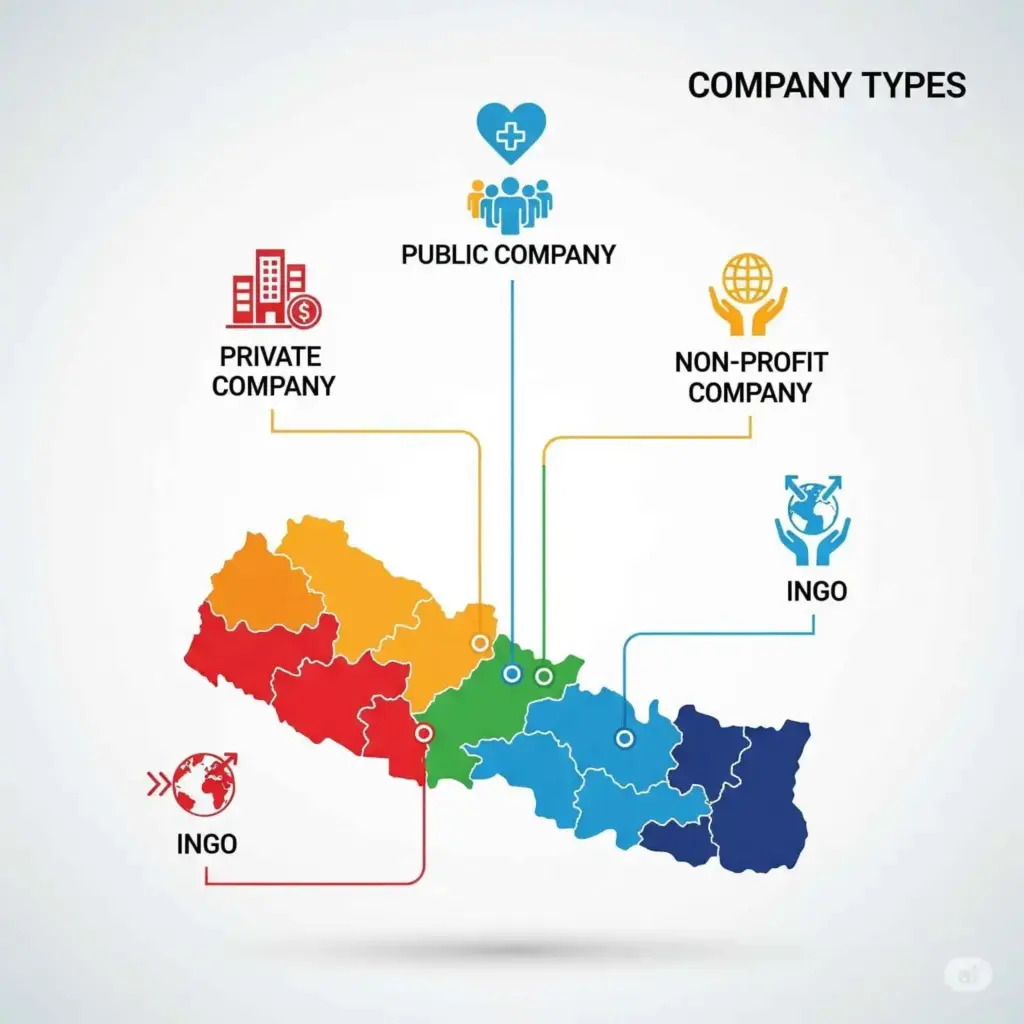
Types of Companies in Nepal
Private Limited Company
The most popular business structure.
Suitable for:
- Startups
- SMEs
- Consulting firms
- Technology companies
- Trading businesses
- Family-owned enterprises
Benefits include:
- Limited liability
- Separate legal identity
- Flexible management structure
Public Limited Company
Generally used for larger businesses planning public investment or stock market participation.
Foreign-Invested Company
Used when foreign investors participate in ownership.
Additional approvals and compliance requirements apply.
Requirements to Start a Private Limited Company
Before beginning registration, prepare the following:
Shareholders
A private company must have at least one shareholder.
Directors
At least one director is required.
Registered Office Address
Every company must maintain a registered office address in Nepal.
Company Name
The proposed name must be unique and approved by the Office of the Company Registrar.
Business Objectives
The company must clearly describe the activities it intends to perform.
Constitutional Documents
You will need:
- Memorandum of Association (MOA)
- Articles of Association (AOA)
Step-by-Step Company Registration Process in Nepal
Step 1: Decide Your Business Structure
Identify whether you are establishing:
- Private Limited Company
- Public Limited Company
- Foreign-Invested Company
Most entrepreneurs choose a Private Limited Company because it offers flexibility and limited liability protection.
Step 2: Select and Reserve a Company Name
A company name must be unique and distinguishable from existing registered companies.
When choosing a name:
- Avoid names already registered.
- Avoid misleading names.
- Ensure the name reflects your business activity if possible.
Once approved, the name reservation allows you to proceed with incorporation.
Step 3: Draft Incorporation Documents
The main documents include:
Memorandum of Association (MOA)
The MOA defines:
- Company objectives
- Share capital
- Shareholder information
- Registered office details
Articles of Association (AOA)
The AOA governs:
- Internal management
- Director powers
- Meetings
- Share transfers
- Corporate governance procedures
Step 4: Gather Supporting Documents
Common supporting documents include:
- Citizenship certificates
- Passport copies (for foreign investors)
- Passport-size photographs
- Address details
- Shareholder information
- Director information
Additional documents may be required depending on the nature of the business.
Step 5: Submit the Application
Submit the incorporation application together with all supporting documents and prescribed government forms.
The Office of the Company Registrar reviews the submission and may request corrections if necessary.
Step 6: Pay Government Registration Fees
Registration fees depend on the company’s authorized capital.
The applicable fee schedule may change periodically, so applicants should verify the latest rates before submission.
Step 7: Receive the Certificate of Incorporation
After approval, the company receives:
- Certificate of Incorporation
- Company Registration Number
This officially creates the company as a legal entity.

What Happens After Company Registration?
Many entrepreneurs mistakenly believe registration is the final step.
Several post-registration obligations must also be completed.
Obtain PAN Registration
PAN registration is essential for tax compliance and banking activities.
Register for VAT (If Applicable)
Businesses meeting VAT requirements must complete VAT registration.
Open a Corporate Bank Account
Most banks require:
- Incorporation Certificate
- PAN Certificate
- Company documents
- Board resolution
Maintain Corporate Records
Companies should maintain:
- Shareholder records
- Director records
- Meeting minutes
- Financial records
File Annual Returns
Annual compliance filings are mandatory for maintaining good legal standing.
Common Mistakes During Company Registration
Avoid these common errors:
- Choosing a name that is already registered
- Incorrect shareholder information
- Incomplete MOA or AOA
- Missing signatures
- Incorrect business objectives
- Failure to complete post-registration compliance
- Delayed annual filings
Proper preparation helps avoid unnecessary delays.
How Long Does Company Registration Take?
The timeline depends on:
- Accuracy of submitted documents
- Government processing workload
- Nature of business activities
- Foreign investment involvement
Simple domestic registrations are generally completed much faster than foreign-invested projects.
How Much Does Company Registration Cost?
Costs typically include:
- Government registration fees
- Document preparation expenses
- Notarization costs
- Professional service fees (if advisors are engaged)
The total cost varies depending on company capital and complexity.
When Should You Seek Professional Assistance?
Professional assistance may be beneficial when:
- Foreign investors are involved
- Multiple shareholders exist
- Shareholding structures are complex
- Regulatory approvals are required
- Corporate governance arrangements need customization
Professional advisors can assist with documentation, compliance, and regulatory procedures.
Final Thoughts
Registering a company in Nepal is the first step toward building a legally recognized and scalable business. By choosing the right business structure, preparing the required documents, and completing registration and compliance requirements correctly, entrepreneurs can avoid costly delays and focus on growth.
If you need assistance with company registration, foreign investment, corporate compliance, or business setup in Nepal, CorporateBizLegal provides practical legal guidance tailored to startups, SMEs, and investors.
Frequently Asked Questions
What are the basic requirements to start a private limited company?
You generally need a unique company name, at least one shareholder, at least one director, a registered office address, incorporation documents, and supporting identification documents.
How many people are needed to register a company?
A private limited company can generally be incorporated with a minimum of one shareholder and one director.
Can a foreigner register a company in Nepal?
Yes. Foreign investors may establish companies in Nepal, subject to applicable foreign investment laws and approval requirements.
How long does company registration take?
Processing times vary depending on document completeness, regulatory approvals, and government workload.
Do I need PAN registration after incorporation?
Yes. PAN registration is typically necessary for tax compliance and business operations.
Can I operate a business without registering a company?
Certain activities may be conducted under other business structures, but many businesses benefit significantly from formal company registration.
Where can I find professional assistance for setting up a new business entity?
You can seek assistance from qualified corporate lawyers, company registration consultants, chartered accountants, or business advisory firms experienced in Nepalese corporate compliance.
Is annual compliance mandatory after registration?
Yes. Companies must comply with annual filing and corporate governance obligations.
What documents are required for company registration?
Requirements vary, but commonly include identification documents, incorporation documents, shareholder information, director information, and company details.
Can I change company details after registration?
Yes. Changes such as directors, shareholders, capital structure, or registered office address can generally be updated through prescribed regulatory procedures.
Was this article helpful?
Let us know what you think!