
Table of Contents
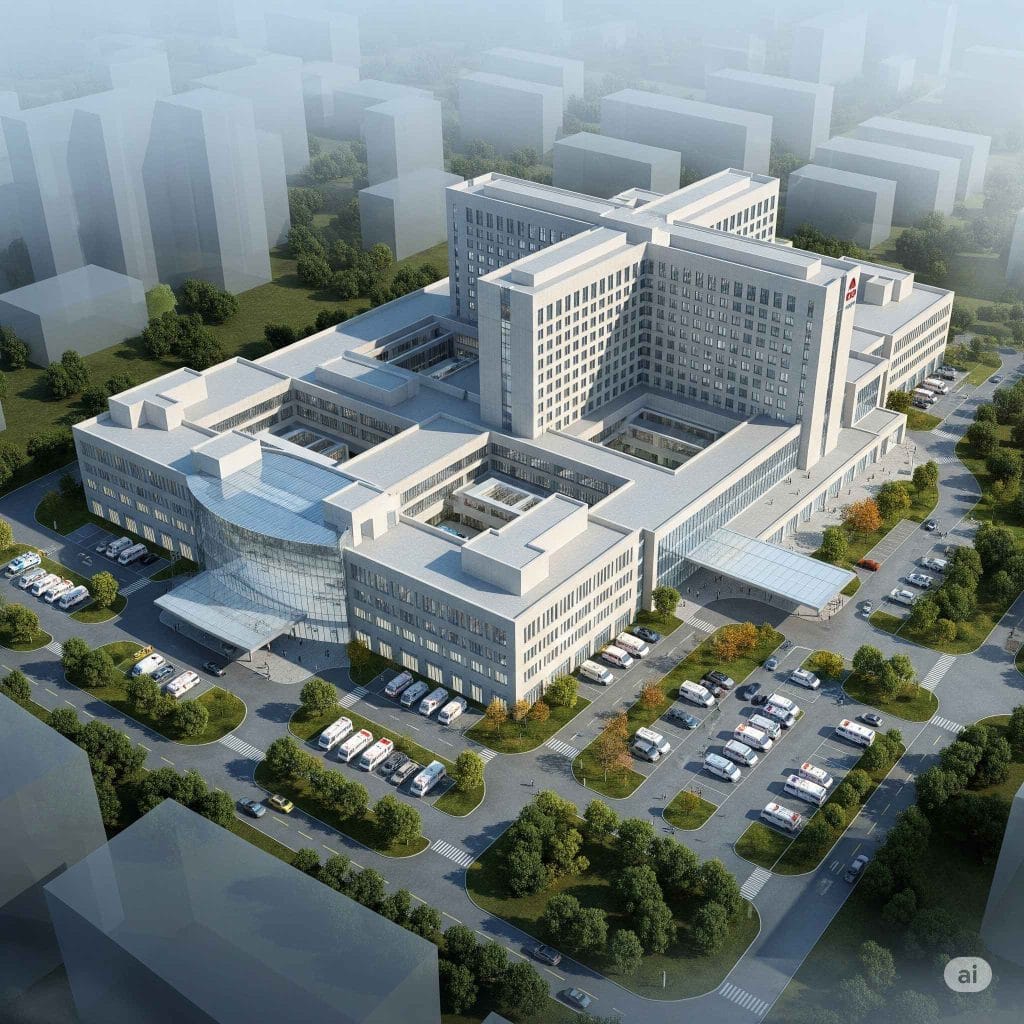
500 bed hospital registration Nepal is the federal licensing process required to establish large-scale tertiary care hospitals with 500-bed capacity, administered by the Ministry of Health and Population (MoHP) under the Public Health Service Act, 2075 (2018). This registration category falls under exclusive federal government jurisdiction due to the tertiary care nature of such facilities and their significant contribution to national healthcare infrastructure. Institutions of this scale are classified as major or apex-level hospitals, requiring extensive regulatory compliance, multi-agency clearance, and substantial financial investment.
Healthcare investors must navigate extraordinarily complex legal and regulatory frameworks when pursuing 500 bed hospital registration Nepal approval. The process demands coordination with multiple federal agencies, adherence to international healthcare standards, and demonstrated technical and clinical expertise. Core requirements include comprehensive medical departments, specialized diagnostic and surgical equipment, qualified specialist staff, research capabilities, teaching and academic affiliations, and emergency response systems benchmarked against international tertiary-care norms.
Also considering a smaller facility? Register 100 bed hospital in Nepal with Us Easily.
Where Can 500 Bed Hospitals Be Registered in Nepal?
Registration authority for 500 bed hospital registration Nepal rests exclusively with the federal government, exercised through the Ministry of Health and Population. Provincial governments have no jurisdiction over facilities exceeding 200-bed capacity, since such institutions are treated as national-level tertiary care infrastructure rather than provincial health assets. The Department of Health Services (DoHS) coordinates technical evaluation through specialized review committees, while the Ministry of Finance and Investment Board Nepal (IBN) oversee investment approvals for projects exceeding the NPR 1 billion threshold, particularly where foreign direct investment is involved.
Legal Framework for Large Hospital Registration
Public Health Service Act, 2075 (2018)
The cornerstone legislation governing 500 bed hospital registration Nepal is the Public Health Service Act, 2075. This comprehensive law establishes stringent regulatory frameworks for large healthcare facilities and empowers the Ministry of Health and Population to set minimum capital, staffing, and infrastructure benchmarks. Under current regulatory practice, hospitals with more than 200 beds require a minimum capital of NPR 1 billion, reflecting the government’s emphasis on quality tertiary healthcare infrastructure rather than volume-based expansion alone.
Key provisions specifically affecting large hospitals include:
- Federal licensing requirements for facilities above 200 beds
- Mandatory tertiary care service provisions
- Research and teaching facility obligations
- International quality accreditation requirements
- Disaster preparedness and emergency response capabilities
Health Facility Operation Standards, 2077
The Ministry of Health and Population has established enhanced operational standards for 500 bed hospital registration Nepal facilities, summarized below:
| Category | Requirement | 500-Bed Specifications |
|---|---|---|
| Infrastructure | Building Standards | Seismic Zone V compliance, helipad facilities |
| Medical Equipment | Tertiary Care Equipment | MRI, CT scan, cardiac catheterization lab, linear accelerator |
| Staffing | Specialist Coverage | 24/7 specialist availability across 15+ departments |
| Emergency Services | Trauma Center | Level 1 trauma certification, air ambulance capability |
| Research Facilities | Clinical Research | IRB-approved research infrastructure |
Step-by-Step Process for 500 Bed Hospital Registration in Nepal
Step 1: Feasibility Study and Pre-Application Consultation
The process begins with a comprehensive feasibility study analyzing demographic demand, disease burden, competitive landscape, and financial viability. The promoters should then schedule a pre-application consultation with the Ministry of Health and Population to understand specific requirements for super-specialty facilities. This stage includes preliminary discussions with the Department of Health Services regarding site suitability, catchment area needs, and alignment with the national health infrastructure master plan.
Step 2: Company Incorporation and Investment Approval
Before applying for health facility registration, the promoters must register the hospital as a corporate entity with the Office of the Company Registrar(OCR). For foreign investors, approval from the Investment Board Nepal under the Foreign Investment and Technology Transfer Act, 2075 (2019) is mandatory. The company must also obtain a Permanent Account Number (PAN) and VAT registration from the Inland Revenue Department.
Step 3: Land Acquisition and Building Plan Approval
The hospital must secure land meeting the minimum area requirements prescribed by the MoHP—typically proportionate to bed capacity, with adequate provision for future expansion. Building plans must comply with the Nepal National Building Code, obtain approval from municipal authorities, and include earthquake-resistant design certification. Fire safety clearance from the Department of Fire Services and environmental impact assessment approval from the relevant environmental authority are also required at this stage.
Step 4: Preparation of Technical and Legal Documents
The promoters must compile an extensive documentation package, including:
- Detailed project proposal with vision, mission, and organizational structure
- Architectural blueprints and engineering drawings approved by competent authorities
- Equipment inventory with technical specifications and procurement plans
- Comprehensive staffing plan with qualification requirements
- Financial projections and proof of capital adequacy
- Medical waste management plan aligned with national healthcare waste management guidelines
- Infection control protocols and patient safety frameworks
- Quality assurance manual and standard operating procedures
Step 5: Application Submission to the Ministry of Health and Population
The formal application for 500 bed hospital registration in Nepal is submitted to the MoHP with all supporting documents. The application must specify the proposed clinical departments, bed distribution, specialty services, and teaching or research functions. A non-refundable application processing fee, as prescribed by the Ministry, must accompany the submission.
Step 6: Technical Evaluation and Site Inspection
The MoHP constitutes a multi-disciplinary technical committee comprising representatives from the Department of Health Services, Nepal Medical Council, Nepal Nursing Council, and subject matter experts. This committee conducts a rigorous evaluation of the proposal, followed by an on-site inspection to verify infrastructure readiness, equipment installation, and staffing deployment. The committee assesses compliance with the Health Institution Establishment, Operation and Upgrade Standard Related Directive, 2070.
Step 7: Final Approval and Registration Certificate
Upon satisfactory technical evaluation, the Ministry of Health and Population issues the hospital registration certificate. This certificate specifies the approved bed capacity, permitted clinical specialties, and any operational conditions. The hospital must then obtain additional operational licenses for pharmacy services, laboratory diagnostics, radiology, and blood bank operations from the Department of Drug Administration and other relevant bodies.
Step 8: Pre-Opening Inspection and Operational Clearance
Before commencing patient services, the hospital undergoes a final pre-opening inspection by MoHP officials. This inspection verifies that all registered parameters have been implemented, emergency systems are functional, and staff are in position. Only after receiving operational clearance may the hospital officially admit patients.
Infrastructure Requirements for 500-Bed Facilities
Physical Infrastructure Standards
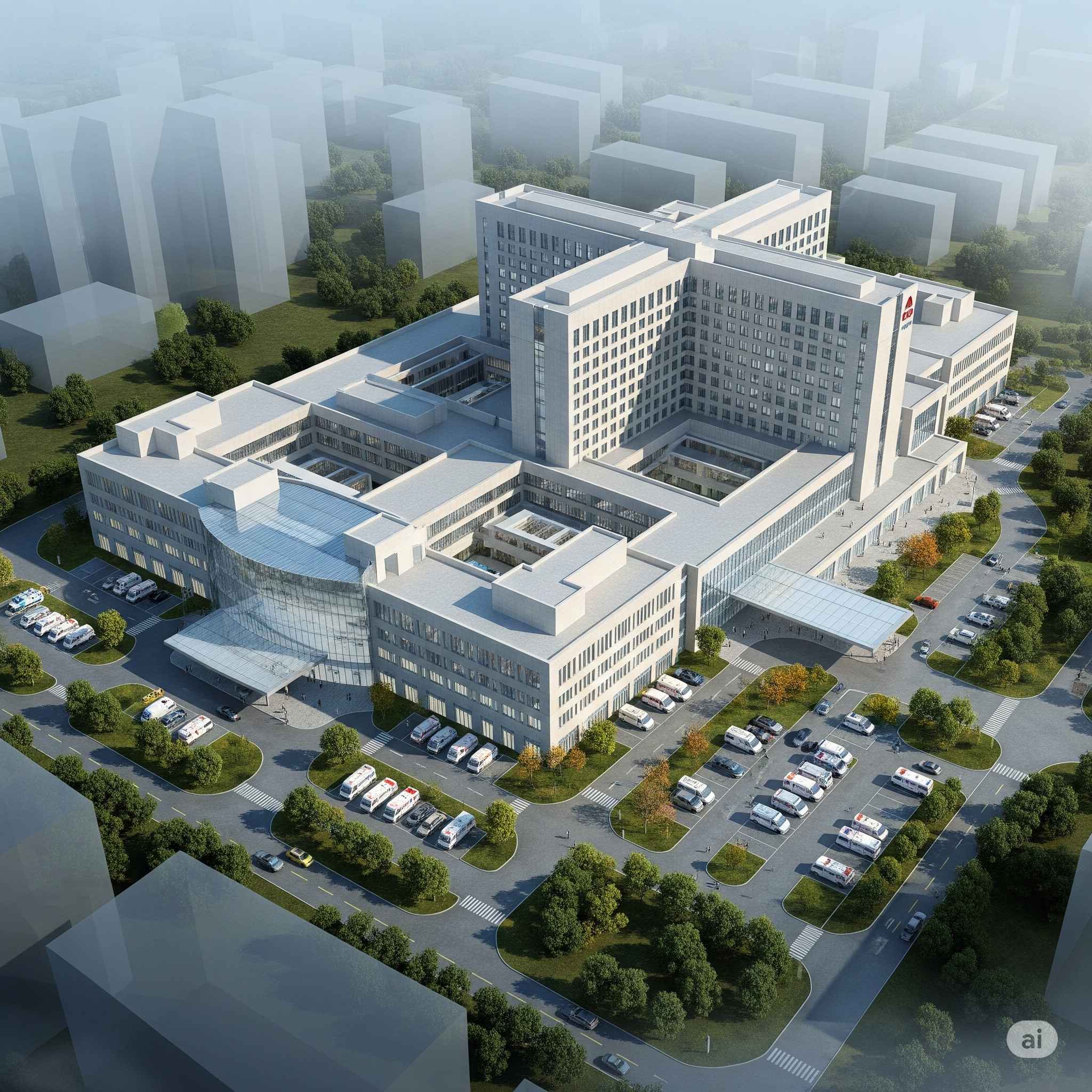
A 500-bed tertiary care facility must provide comprehensive infrastructure across clinical, diagnostic, and support services:
| Infrastructure Component | Requirement |
|---|---|
| Total Land Area | Minimum proportionate to bed capacity; typically 15–20 ropani for 500 beds |
| Building Structure | Earthquake-resistant design; compliance with Nepal National Building Code |
| General Ward Space | Minimum 80–100 square feet per bed |
| Intensive Care Units | Minimum 5–10% of total beds; includes MICU, SICU, NICU, PICU, and cardiac ICU |
| Operation Theaters | Minimum 8–10 modular OTs with HEPA filtration and dedicated recovery bays |
| Emergency Department | Dedicated triage, resuscitation, observation, and trauma bays; 24/7 ambulance bay |
| Diagnostic Imaging | MRI (1.5 Tesla minimum), CT scan (64-slice minimum), digital X-ray, ultrasound, mammography |
| Laboratory Services | Clinical biochemistry, hematology, microbiology, histopathology, and molecular diagnostics |
| Blood Bank | Licensed component separation facility with 24/7 availability |
| Central Sterile Supply | Automated sterilization, decontamination zones, and sterile storage |
| Pharmacy | 24-hour inpatient and outpatient dispensing with cold chain storage |
| Medical Gas Pipeline | Oxygen, vacuum, and compressed air to all wards, ICUs, and OTs |
| Power Backup | 100% automatic switch-over generator capacity for critical areas |
| Biomedical Waste Management | Segregation at source, treatment plant, and final disposal system |
| Fire Safety | Sprinkler systems, fire detection alarms, evacuation plans, and emergency exits |
| Information Technology | Hospital Management Information System (HMIS), Electronic Medical Records (EMR), and PACS |
Ground Floor Requirements:
- Emergency department with 50+ treatment bays
- Outpatient departments for 30+ specialties
- Central laboratory with molecular diagnostics
- Pharmacy with sterile compounding facilities
- Blood bank with component separation capabilities
Multi-Story Specifications:
- Patient towers with smart room technology
- Operating theater complex with 20+ theaters
- Intensive care units across multiple specialties
- Diagnostic imaging center with advanced modalities
- Conference facilities for medical education
Advanced Medical Technology Integration
Technology infrastructure for 500 bed hospital registration Nepal requires cutting-edge, interoperable systems rather than standalone equipment. Core requirements include:
- Hospital Information Systems (HIS) with AI-powered analytics
- Electronic Medical Records (EMR) meeting international interoperability standards
- Telemedicine networks connecting rural healthcare facilities
- Laboratory automation with robotic specimen processing
- Digital imaging systems with cloud-based storage
Specialized Department Requirements
Tertiary care departments mandatory for 500 bed hospital registration Nepal are allocated as follows:
| Department | Bed Allocation | Special Requirements |
|---|---|---|
| Cardiology/Cardiac Surgery | 80-100 beds | Cardiac catheterization lab, CTVS suite |
| Neurology/Neurosurgery | 60-80 beds | Neuro ICU, advanced imaging |
| Oncology | 100-120 beds | Radiation therapy, chemotherapy suites |
| Orthopedics | 60-80 beds | Joint replacement center, sports medicine |
| Emergency/Trauma | 40-60 beds | Level 1 trauma designation |
Staffing Requirements and Professional Standards
Medical Staff Requirements
Physician staffing for 500 bed hospital registration Nepal requires comprehensive specialist coverage credentialed in line with Nepal Medical Council registration requirements. Minimum requirements include:
- Medical Director: Board-certified physician with hospital administration experience
- Department Heads: Specialists with fellowship training in respective fields
- Resident Physicians: Minimum 100-150 residents across specialties
- Consulting Specialists: 24/7 availability in critical care specialties
Nursing and Allied Health Standards
Nursing staff requirements for 500 bed hospital registration Nepal follow internationally benchmarked ratios and are subject to Nepal Nursing Council credentialing:
| Unit Type | Nurse-Patient Ratio | Qualification Requirements |
|---|---|---|
| ICU/CCU | 1:1 or 1:2 | Critical care certification |
| General Medical | 1:4-6 patients | Bachelor’s degree preferred |
| Surgical Units | 1:3-4 patients | Perioperative certification |
| Emergency | 1:2-3 patients | Emergency nursing certification |
Research and Academic Staff
Academic and research obligations inherent in 500 bed hospital registration Nepal, consistent with National Health Research Council (NHRC) ethics requirements, include:
- Research coordinators for clinical trials management
- Medical education directors for resident training programs
- Quality improvement specialists for accreditation compliance
- Information technology specialists for digital health initiatives
Financial Investment and Economic Analysis
Capital Investment Requirements
Investment analysis for 500 bed hospital registration Nepal reveals substantial financial commitments that vary by location. Urban facilities typically require NPR 3-5 billion in initial investment, while rural locations may achieve economies of scale around NPR 2-3 billion.
Detailed Cost Breakdown:
| Investment Component | Percentage | Amount (NPR Billions) |
|---|---|---|
| Land and Construction | 45-50% | 1.5-2.5 billion |
| Medical Equipment | 30-35% | 1.0-1.7 billion |
| Technology Infrastructure | 8-12% | 0.3-0.6 billion |
| Working Capital | 8-10% | 0.3-0.5 billion |
Operational Financial Planning
Operating expenses for 500 bed hospital registration Nepal require sophisticated financial management across several major cost centers:
- Personnel costs: 50-60% of operational expenses
- Medical supplies: 20-25% of monthly expenditure
- Utilities and maintenance: 12-15% of operational budget
- Administrative expenses: 8-10% of total costs
Revenue Generation Models
Financial sustainability for 500 bed hospital registration Nepal depends on diversified revenue streams rather than patient billing alone:
- Patient care services: primary revenue source (70-80%)
- Medical education programs: resident and fellowship training (5-10%)
- Research collaborations: pharmaceutical and device companies (3-5%)
- Consultation services: telemedicine and second opinions (2-3%)
Regulatory Compliance and Quality Assurance
Accreditation Requirements
Quality certification for 500 bed hospital registration Nepal typically involves multiple accreditation bodies operating in parallel with statutory licensing:
- Joint Commission International (JCI) for international recognition
- National Hospital Accreditation Program administered by the Department of Health Services
- ISO 9001:2015 for quality management systems
- NABH accreditation for regional healthcare standards
Ongoing Compliance Obligations
Regulatory monitoring for 500 bed hospital registration Nepal continues well past initial licensing, with reporting obligations owed to distinct authorities:
| Compliance Area | Frequency | Reporting Authority |
|---|---|---|
| Patient Safety Indicators | Monthly | Department of Health Services |
| Financial Audits | Quarterly | Ministry of Finance |
| Quality Metrics | Bi-annually | Accreditation bodies |
| Research Ethics | Annually | National Health Research Council |
International Standards Compliance
Global healthcare standards applicable to 500 bed hospital registration Nepal include:
- World Health Organization (WHO) patient safety guidelines
- International Organization for Standardization (ISO) medical device standards
- College of American Pathologists (CAP) laboratory accreditation
- American College of Surgeons (ACS) trauma center verification
Common Challenges and Strategic Solutions
Regulatory Navigation Complexities
Bureaucratic challenges in 500 bed hospital registration Nepal typically arise from the sheer number of agencies involved rather than any single approval step. Expert management is required for:
- Multi-agency coordination involving 15+ government departments
- Timeline management within an 18-24 month approval window
- Technical compliance meeting international standards
- Financial documentation satisfying Investment Board requirements
Infrastructure Development Challenges
Construction complexities for 500 bed hospital registration Nepal include:
- Specialized contractors with hospital construction experience
- Equipment procurement from international suppliers
- Technology integration across multiple platforms
- Utility infrastructure development in remote locations
Financial Management Strategies
Capital optimization techniques for 500 bed hospital registration Nepal that reduce upfront cash burden include:
- Phased development approach reducing initial capital requirements
- Equipment leasing arrangements with manufacturers
- Public-private partnerships for infrastructure development
- International funding from development finance institutions
Recent Regulatory Developments (2024-2025)
Updated Investment Guidelines
Recent policy changes affecting 500 bed hospital registration Nepal are aimed at reducing approval friction rather than altering underlying capital or clinical requirements:
- Streamlined approval processes through single-window clearance
- Digital application systems reducing paperwork requirements
- Foreign investment incentives for healthcare infrastructure
- Tax benefits for hospitals serving underserved populations
Technology Integration Mandates
Digital health requirements now forming part of 500 bed hospital registration Nepal compliance include:
- Electronic health records with interoperability standards
- Telemedicine capabilities for rural healthcare connectivity
- Data security protocols meeting international standards
- AI integration for diagnostic and treatment support
Success Stories and Case Studies
Norvic International Hospital Model
Norvic International Hospital is a widely cited example of successful large hospital development in Nepal. Initially established as a 100-bed facility, it expanded over time to become one of Nepal’s premier tertiary care institutions. Its growth trajectory illustrates several 500 bed hospital registration Nepal success principles:
- Comprehensive specialty services across 25+ departments
- International accreditation achieving JCI certification
- Advanced technology integration with robotic surgery capabilities
- Medical education partnerships with international institutions
Key Success Factors Analysis
Critical elements observed across successful 500 bed hospital registration Nepal projects include:
- Experienced leadership teams with international healthcare exposure
- Adequate financial planning with 20-30% cost overrun provisions
- Community engagement building local stakeholder support
- Technology partnerships with leading healthcare IT companies
Future Opportunities and Market Trends
The medical landscape in Nepal is expanding rapidly due to rising demand for specialized tertiary care, medical tourism from neighboring regions, and cross-border research collaborations. Large-scale medical centers are uniquely positioned to serve as regional healthcare hubs by deploying advanced genomic and oncology services.
Healthcare Market Evolution
Market dynamics favoring 500 bed hospital registration Nepal investments include:
- Substantial medical tourism growth drawing regional patients from neighboring SAARC territories for affordable specialized treatments.
- Expanding universal health insurance penetration, which directly boosts aggregate patient spending power and payment security.
- Escalating local demand for advanced sub-specialty care, minimizing the need for citizens to travel abroad for complex treatments.
- Favorable federal policy leanings designed to stimulate private sector participation in high-tier clinical infrastructure.
Emerging Technologies
Innovation opportunities within 500 bed hospital registration Nepal:
- Precision medicine ecosystems powered by in-house genomic sequencing and molecular pathology laboratories.
- Robotic surgery centers engineered to minimize length-of-stay metrics and attract regional surgical tourists.
- AI-driven clinical decision systems deployed to enhance diagnostic precision and optimize ward management.
- Renewable green energy microgrids structured to lower high baseline hospital electricity and heating overheads.
Regional Healthcare Hub Development
Strategic positioning for 500 bed hospital registration Nepal facilities:
- Targeting SAARC medical tourism corridors via cross-border clinical marketing and specialized care packages.
- Developing centers of excellence focusing on high-demand sectors like interventional cardiology, neurosurgery, and oncology.
- Forming medical education consortia with international universities to build local clinical research capabilities.
- Coordinating joint epidemiological research funded by international pharmaceutical organizations.
Expert Legal and Consulting Services
Professional guidance proves essential for successful 500 bed hospital registration Nepal projects, given the number of agencies and technical standards involved. Experienced healthcare law specialists typically provide:
- Regulatory compliance audits ensuring adherence to federal requirements
- Documentation preparation meeting international standards
- Government liaison services facilitating approval processes
- Project management support coordinating multiple stakeholders
Selecting Healthcare Legal Experts
Critical selection criteria for 500 bed hospital registration Nepal legal assistance include:
- Healthcare specialization with large hospital experience
- Federal government relations expertise with regulatory bodies
- International standards knowledge covering JCI and ISO requirements
- Financial structuring experience for billion-rupee investments
Comprehensive Project Support Services
End-to-end assistance for 500 bed hospital registration Nepal typically spans:
- Feasibility studies analyzing market opportunities and challenges
- Regulatory strategy development optimizing approval timelines
- Stakeholder management coordinating government and private entities
- Quality assurance programs preparing for accreditation processes
Conclusion
500 bed hospital registration Nepal is a highly regulated process that requires careful planning, significant investment, and strict compliance with federal healthcare laws and technical standards. Proper legal guidance can help investors navigate regulatory requirements efficiently while minimizing delays and compliance risks.
At CorporateBizLegal, we provide end-to-end legal support for 500 bed hospital registration Nepal, including company incorporation, investment structuring, documentation, regulatory approvals, government liaison, licensing, and ongoing compliance. Our experienced legal team works closely with healthcare investors to simplify the registration process and help establish fully compliant healthcare institutions in Nepal.
Frequently Asked Questions
Who registers 500 bed hospitals in Nepal?
The Ministry of Health and Population registers all hospitals exceeding 200 beds. The Department of Health Services conducts technical evaluations, while the Ministry of Finance oversees investment thresholds exceeding NPR 1 billion.
What is the minimum capital requirement for a 500 bed hospital?
The minimum paid-up capital is NPR 1 billion for facilities with more than 200 beds. Actual project costs typically exceed this figure significantly when land, construction, equipment, and working capital are included.
How long does 500 bed hospital registration take?
The complete process generally takes 9 to 18 months, depending on document completeness, construction progress, technical committee schedules, and responsiveness to government queries.
Can foreigners own a 500 bed hospital in Nepal?
Yes, foreign investors may establish hospitals through foreign direct investment after obtaining approval from the Investment Board Nepal. Foreign ownership is generally permitted up to specific limits as governed by prevailing foreign investment regulations.
What laws govern hospital registration in Nepal?
The primary legislation is the Public Health Service Act, 2075 (2018), supplemented by the Health Institution Establishment, Operation and Upgrade Standard Related Directive, 2070, and professional council Acts governing medical, nursing, and health personnel.
What infrastructure is required for a 500 bed hospital?
Requirements include earthquake-resistant buildings, modular operation theaters, multi-specialty ICUs, advanced diagnostic imaging (MRI, CT), a licensed blood bank, 24/7 pharmacy, medical gas pipeline systems, and comprehensive biomedical waste management facilities.
Is a teaching hospital affiliation required?
While not mandatory for basic registration, 500-bed facilities often seek academic affiliation with medical universities to enhance specialist recruitment, research capacity, and national reputation. Such affiliation requires separate Nepal Medical Council accreditation.
What happens if a hospital operates without registration?
Operating without a valid health facility license violates Section 35 of the Public Health Service Act and exposes the promoters to penalties, facility closure orders, and potential criminal liability under prevailing health regulations.
How often must hospital registration be renewed?
Hospital registration certificates require annual renewal. The facility must undergo periodic inspections and demonstrate continued compliance with staffing, infrastructure, and quality standards to qualify for renewal.
Was this article helpful?
Let us know what you think!